
.jpeg)
The Bright and Dark Sides of Surface Acting: A Daily Diary Study of Proactive and Suppressive Faking
* 연세대학교, 미래캠퍼스 경영학과 (Yonsei University, Department of Business Administration, MIRAE Campus)
DOI: https://doi.org/10.17287/kmr.2026.55.2.1005
Abstract
Surface acting has long been characterized as a uniformly detrimental strategy of emotional labor. Challenging this monolithic perspective, this study utilizes cognitive dissonance theory to deconstruct surface acting into two distinct strategies: proactive faking (the agentic display of unfelt emotions) and suppressive faking (the dual task of inhibiting felt emotions while faking the required ones). Employing a 10-day daily diary completed by 60 educators (n=596), time-lagged multilevel path analysis was used to examine the differential impacts of these variables on burnout. The results revealed opposing psychological trajectories: proactive faking predicted reduced next-day burnout through decreased emotional dissonance, whereas suppressive faking predicted increased subsequent burnout through heightened dissonance. These findings suggest that the psychological costs traditionally attributed to surface acting are driven by the act of suppression—which threatens an employee’s self-concept—rather than the performance of the emotion itself. Decoupling proactive faking from suppression allows it to function as an adaptive coping mechanism for employees. This distinction necessitates a fundamental theoretical refinement of the conceptualization and management of emotional labor in high-demand professions.
Ⅰ. Introduction
For three decades, organizational research has maintained that faking emotions at work is detrimental (Gabriel et al., 2023). However, a persistent puzzle remains: why do some employees engage in daily surface acting without experiencing apparent harm, while others rapidly experience burnout? (Ashforth and Humphrey, 1993; Chawla et al., 2021; Lee et al., 2023a; Lennard et al., 2019; Yagil, 2020). This inconsistency suggests a critical flaw in our understanding of emotional labor, defined as the management of feelings to create a publicly observable display as part of the work role (Grandey and Melloy, 2017). Specifically, surface acting–which involves modifying outward expressions without altering inner feelings–has received considerable attention due to its consistent link to negative outcomes, such as employee burnout (Chae and Yang, 2020; Hülsheger and Schewe, 2011). Burnout is typically understood as a psychological syndrome comprising three key dimensions: emotional exhaustion (feeling emotionally overextended and depleted), depersonalization (a cynical or detached response to others, such as clients or students), and reduced personal accomplishment (a sense of ineffectiveness and lack of achievement in one's work) (Maslach et al., 2001). Nevertheless, the assumption that all forms of faking are equally detrimental has significant implications for both employee well-being and management theories (Gabriel et al., 2023).
The relationship between surface acting and employee well-being is primarily explained through two theoretical lenses: emotion regulation and emotional performance (Gabriel et al., 2023; Grandey and Gabriel, 2015). The first perspective, the resource depletion model, emphasizes the regulatory process, positing that inhibiting genuine feelings is a cognitively taxing activity that exhausts self-regulatory resources, ultimately leading to strain (Gross, 2015; Lian et al., 2017; Scott and Barnes, 2011). The second perspective, the dissonance-based model, focuses on the outcomes of emotional performance. This view suggests that the observable mismatch between an employee’s inner feelings and outward displays fosters a sense of inauthenticity. This perceived inauthenticity threatens the individual’s self-concept, thereby inducing psychological distress (Hülsheger and Schewe, 2011; Pugh et al., 2011).
Despite significant theoretical attention, empirical findings on emotional labor remain inconsistent. For decades, the field has appeared “stalled at a crossroads” due to “fuzzy construct conceptualizations” (Grandey and Gabriel, 2015, p. 323). A central issue identified in this evolution is the critique of treating surface acting as a monolithic construct (Gabriel et al., 2023; Yang, 2024). This conceptual limitation has led to a typical confound in measurement, where fundamentally different psychological processes are trapped within a single score (Clarke et al., 2024; Zapf et al., 2021). For instance, widely used surface acting scales—including those by Brotheridge and Lee (2003), Grandey (2003), and Diefendorff et al. (2005)—improperly conflate the behavioral act of performance with the internal cognitive task of suppression. Some items focus purely on the active faking, such as “I put on a show or performance when interacting with customers.” Other items explicitly tap into the internal conflict involving suppression, such as “I show feelings to customers that are different from what I feel inside.” Consequently, this monolithic approach is considered theoretically not justified, a criticism recently validated by empirical evidence (Clarke et al., 2024; see the Theory and Hypotheses section for a detailed discussion on their conceptualization of surface acting). Indeed, recent studies hint at this complexity, showing that faking negative emotions might be beneficial (Lennard et al., 2019) or that surface acting driven by benevolent intentions is less harmful (Yagil, 2020), findings that are difficult to reconcile from a monolithic view. Addressing this gap is necessary to move beyond asking “is surface acting bad?” to the more precise question: “Which component of surface acting is responsible for the harm?”
Previous studies confirm that inauthentic emotional displays cause employee strain (Hülsheger and Schewe, 2011). However, the assumption that all faking is uniformly detrimental has rarely been questioned, largely due to the longstanding treatment of surface acting as a single, uniform construct (Grandey and Gabriel, 2015; Zapf et al., 2021). This raises the question: if surface acting involves both active faking and, at times, suppression, do these two components have the same effect on employee well-being? To address this question, a 10-day diary study was conducted with 60 early childhood educators, yielding 596 observations. Using time-lagged multilevel path analysis, this study tested how daily proactive faking –the agentic, goal-directed construction of professional displays– and suppressive faking –the reactive, conflict-driven dual task of inhibiting felt emotions while faking others– differentially predicted lagged burnout through emotional dissonance. This approach allows for the disentanglement of these two facets of surface acting and provides a more precise model and its consequences for well-being.
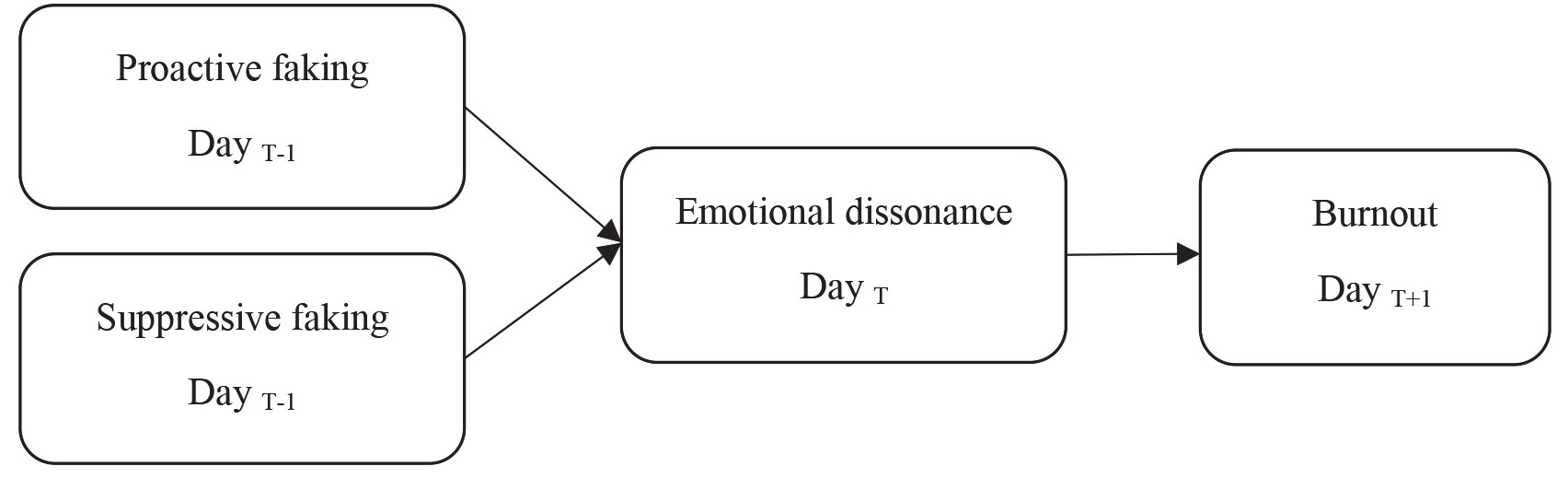
This study decomposes surface acting into proactive and suppressive faking, integrating resource depletion and dissonance-based models to demonstrate their opposing effects. First, the research clarifies the mechanisms underlying harm by extending the critiques of Zapf et al. (2021) and the empirical findings of Clarke et al. (2024). While Clarke et al. (2024) isolated emotional dissonance as the primary driver of exhaustion, this study shifts the focus from component isolation to functional agency. It identifies proactive faking not as a neutral act of suppression, but as an adaptive, agentic strategy. By demonstrating that proactive faking prevents burnout—through reducing dissonance via competence framing and minimizing regulatory costs—this study challenges long-standing assumptions. Prior work has identified the drivers of exhaustion; however, this research explains how faking can serve as a protective professional tool. Second, the study integrates the effort-recovery model (Meijman and Mulder, 1998; Sonnentag et al., 2022) to explain how resource costs manifest over time. Daily diary data reveal that suppressive faking creates a persistent load effect that hinders recovery, whereas proactive faking preserves resources by avoiding the accumulation of strain. This approach provides a dynamic model of the dual nature of surface acting and its divergent consequences. The hypothesized model is illustrated in Figure 1.
Ⅱ. Theory and Hypotheses
2.1 Deconstructing Surface Acting: From Conceptual Monolith to Measurement Conflation
One of the most consistent findings in emotional labor literature is the robust positive relationship between surface acting and burnout (Hülsheger and Schewe, 2011). However, this decades-long consensus masks a critical conceptual ambiguity: treating surface acting as a monolithic construct (Grandey and Gabriel, 2015; Zapf et al., 2021). Recent reviews argue that conventional surface acting scales are confounded by measurement errors (Clarke et al., 2024). This critique posits that existing measures improperly conflate two theoretically distinct psychological processes—the behavioral act of performance (i.e., faking a display) and the internal cognitive state of suppression and dissonance (i.e., hiding true feelings). This conflation is evident on the field's most fundamental scale. The scale by Brotheridge and Lee (2003), for example, focuses on cognitive suppression using items such as, “Resist expressing my true feelings” and, “Hide my true feelings about a situation.” These items measure the inhibitory masking of inner states rather than the active fabrication of required emotional displays. Similarly, Grandey's (2003) scale mixes items measuring active faking (e.g., put on an act) with items implying internal discrepancy (e.g., just pretend to have the emotions I need). This confusion was solidified by the widely used Diefendorff et al. (2005) scale, which combines proactive-oriented items (e.g., put on a show or performance) with items that directly measure emotional dissonance (e.g., show feelings... that are different from what I feel inside).
Zapf et al. (2021) identified this as a typical confound in the literature. They argue that these scales trap “an emotion that is felt” and “an emotion that is shown” within the same question. Consequently, it is difficult to determine whether the resulting burnout is caused by (1) the regulatory costs of faking behavior or (2) the negative emotions felt during a stressful, dissonant situation. Zapf and colleagues conclude that this confound is theoretically not justified. Clarke et al. (2024) empirically validated these concerns using the Perth Emotional Labor Scale (PELS), which disentangles the internal psychological state from outward regulatory strategies. Specifically, the PELS delineates three functionally distinct constructs: emotional dissonance (ED), expressive suppression (ES), and expressive amplification (EA). Emotional dissonance captures the intrapsychic state of incongruence between felt and required emotions, while expressive suppression (ES) and amplification (EA) represent the behavioral maneuvers employed to manage this incongruence. Suppression involves the theatrical feigning or exaggeration of positive emotional displays, whereas amplification involves inhibiting felt negative emotions. Clarke et al. (2024) found that when these constructs are isolated, emotional dissonance uniquely predicts exhaustion, whereas suppression and amplification lose their predictive power over burnout once dissonance is controlled. This finding suggests that the psychological harm traditionally attributed to surface acting may be driven by unresolved internal conflict (dissonance) rather than the act of faking itself. By refining these boundaries, the PELS provides a more granular lens through which distinct pathways to burnout can be examined.
This progression of theoretical critique and empirical evidence suggests that the harm attributed to surface acting may not stem from the act of performance itself, but rather from the internal conflict of dissonance and suppression. To address this measurement conflation, this study deconstructs the traditional surface acting construct into two distinct components based on agentic regulation: proactive faking and suppressive faking. This conceptual refinement builds upon and significantly extends Clarke et al.’s (2024) work. While the PELS framework provides an empirical foundation by isolating expressive suppression (ES) and expressive amplification (EA) as distinct behavioral maneuvers, this study evolves these concepts by integrating agentic intent and conflict intensity into the regulatory process. Specifically, proactive faking inherits the behavioral properties of ES—the theatrical display of required emotions—but refines it by specifying that this performance is self-initiated and goal-directed (Lennard et al., 2019). Unlike ES, which is often viewed as a neutral act of feigning, proactive faking is conceptualized as a strategy of professional agency that occurs in the absence of acute internal conflict, thereby transforming faking into a constructive tool for building a professional persona and facilitating a functional distance between the self and the occupational role (Ashforth and Humphrey, 1993).
In contrast, suppressive faking inherits behavioral properties of EA, wherein an employee feigns required emotions while reactively inhibiting genuinely felt negative ones. Unlike Clarke et al. (2024), who conceptualized emotional dissonance as a sub-component of surface acting, this study treats dissonance as a psychological consequence rather than a regulatory strategy (Grandey, 2003; Hülsheger and Schewe, 2011). By isolating the behavioral act of suppressive faking from its resulting state (i.e., emotional dissonance), this framework demonstrates that the harm associated with surface acting is driven by a conflict-heavy form of regulation. Consequently, while the PELS provides a granular inventory of components, the current model offers causal logic explaining how both forms of faking lead to resource-depleting outcomes.
2.2 The Regulatory Process: Self-Control Effort and Resource Depletion
From a resource depletion perspective, proactive faking constitutes a relatively active, yet simple, form of self-control. Although conscious effort is required to enact organizationally desired emotions, their cognitive demands remain comparatively low because they do not involve managing a strong, conflicting internal state (Lennard et al., 2019). For example, in a store clerk or flight attendant offering a welcoming smile, employees actively perform or simulate the required emotional display, even when their genuine feelings are neutral, absent, or simply different (Rafaeli and Sutton, 1987). This theatrical approach can create a psychological distance between the self and the role, potentially allowing employees to act without deep internal conflict (Ashforth and Humphrey, 1993). The primary cost appears to be inauthenticity–a discrepancy between one's “true self” and “acting self” (Chawla et al., 2021)–though this cost may remain relatively contained within the immediate performance, lacking the persistence to deplete longer-term resources.
Although both involve proactive regulatory efforts, proactive faking differs fundamentally from deep acting in its regulatory target. Deep acting is an internal effort to modify felt emotions to achieve a sense of intra-psychic authenticity (Grandey, 2003). In contrast, proactive faking focuses solely on the agentic construction of a professional display (e.g., faking in good faith). It does not require the individual to believe or feel the displayed emotion; instead, it frames the act of faking as a successful execution of a work role (Rafaeli and Sutton, 1987). Furthermore, deep acting involves a complex realignment of internal states through attentional deployment and positive reappraisal, whereas proactive faking operates as a theatrical, single task that maintains a functional distance between the self and the role, thereby protecting the employee's internal resources from the strain of self-transformation.
By contrast, suppressive faking likely involves a more resource-intensive form of self-control (Deng et al., 2017; Gross and John, 2003). While deep acting functions as a repair strategy that aligns felt and expressed emotions, suppressive faking leaves negative emotions unmodified, maintaining a discrepancy between internal feelings and external displays (Grandey, 2003). When employees experience genuine negative emotions, they must engage in a dual task: inhibiting the felt negative emotion while simultaneously generating a required positive display (Scott and Barnes, 2011). This dual-task nature distinguishes suppressive faking from deep acting, as it creates an internal battle in which the employee actively resists one emotion while performing another (Gross and John, 2003). This dual-task nature distinguishes suppressive faking from deep acting. This process often triggers what Wegner (1994) identifies as an ironic mental control process. This process often triggers what Wegner (1994) identifies as an ironic mental control process, potentially involving a cognitive system that splits into two opposing processes: an intentional operating process seeking desired states (positive emotions) and an ironic monitoring process seeking undesired states (negative emotions). Paradoxically, monitoring unwanted emotions may increase cognitive accessibility and phenomenological intensity, potentially creating persistent psychological conflict.
These strategies may also differ in their temporal dynamics, which are essential for understanding the developmental trajectory of burnout. The effort-recovery model (Meijman and Mulder, 1998) distinguishes between acute load reactions–immediate responses to work demands–and persistent load effects that may interfere with the recovery process. This framework aligns with the self-control as a muscle model (Muraven and Baumeister, 2000), which posits that self-regulation consumes finite resources.
Proactive faking likely exhibits low-load persistence, reflecting a more manageable acute load reaction within an effort-recovery framework. Given its relatively active yet simple nature as a form of self-control, the cognitive demands of proactive faking may remain comparatively low, as regulatory efforts primarily focus on an intentional process aimed at impression management (Rafaeli and Sutton, 1987). By avoiding the complex dual task of managing conflicting internal states, the associated effort remains manageable and temporary—a necessary short-term cost to meet immediate professional demands.
Crucially, in this theatrical context, individuals find it easier to disengage once an interaction concludes. Unlike suppressive faking, proactive faking is less likely to maintain persistent preoccupation with concealing forbidden emotions. Without this constant internal pressure, the state of tension naturally fades during off-job time. This could allow employees to more effectively disengage and initiate the replenishment of self-regulatory resources, potentially ensuring that the strain dissipates rather than accumulating into a persistent load effect. Therefore, while proactive faking consumes resources in the short term, its nature as a discrete acute load could facilitate a healthier recovery cycle, potentially preventing long-term burnout.
In contrast, suppressive faking appears to generate high-load persistence through a self-perpetuating dual-task mechanism. Initially, the ironic monitoring process may create “unfinished cognitive business,” as suppressed emotions could remain psychologically active, demanding continued regulatory effort even after work (Uy et al., 2017). Furthermore, suppression may impede natural emotional processing, potentially resulting in unresolved emotional residues (Gross and John, 2003). This persistent activation could interfere with recovery processes necessary for sleep restoration (Sonnentag et al., 2008); although sleep may alleviate physical tension, it may have limited efficacy in resolving lingering negative affect (Frérart et al., 2023). These differential patterns suggest that while proactive faking may create temporary acute strain, suppressive faking is more likely to generate lasting psychological residues that accumulate and contribute to chronic burnout (Lee et al., 2023b).
2.3 The Psychological Consequences: Inauthenticity and Cognitive Dissonance
Emotional dissonance–the conscious awareness of a discrepancy between felt and expressed emotions–is a central psychological state that translates emotional labor into burnout (Grandey, 2003). Drawing on cognitive dissonance theory, research suggests that this state is not inherently detrimental. The negative consequences of dissonance appear to depend on whether faking emotions threatens an employee's core self-concept (Pugh et al., 2011). This threat can manifest in two ways: as conflict with one's values (a threat to self-liking) or as a challenge to one's abilities (a threat to self-competence). For example, consider a restaurant server who must laugh politely at an unfunny joke. A clear state of emotional dissonance exists between their internal feeling ("This joke is terrible") and their external expression ("Haha, that's hilarious!"). However, this dissonance is unlikely to cause lasting strain because the act does not threaten the server's core self-concept. Instead of a deep violation of their values, the server may frame the act as a successful execution of the professional skill needed to secure a good tip. In this case, dissonance is a manageable aspect of the job that bolsters their sense of self-competence, rather than threatening their self-liking.
This example illustrates the proposed core theoretical distinctions. The role of proactive faking is theoretically ambiguous, as its psychological meaning can be interpreted in two opposing ways depending on its interaction with an employee's self-concept (Pugh et al., 2011). Specifically, when an act is framed as a professional skill, it is less likely to pose a significant threat to self-concept (Ashforth and Humphrey, 1993). Successful performance without internal conflict can foster feelings of mastery and self-competence, thereby reducing dissonance and mitigating the risk of burnout (Lennard et al., 2019; Pugh et al., 2011; Yagil, 2020).
However, behavioral discrepancy inherent in proactive faking–displaying an emotion that is not genuinely felt–can still be problematic for some employees. For individuals who place a high personal value on authenticity, those for whom expressing their “true self” is central to self-liking, any act of displaying an unfelt emotion can be perceived as a conflict with their core values, regardless of the effort involved (Pugh et al., 2011). From this perspective, the behavior itself, while not requiring cognitive load, creates dissonance by violating personally held standards of conduct. Because proactive faking can be psychologically interpreted as either an affirmation of competence or a violation of authenticity, the following competing hypotheses are proposed:
Hypothesis 1a: Emotional dissonance (T) mediates the negative relationship between proactive faking (T-1) and subsequent burnout dimensions (T+1).
Hypothesis 1b: Emotional dissonance (T) mediates the positive relationship between proactive faking (T-1) and subsequent burnout dimensions (T+1).
In contrast, suppressive faking is theorized to be a potent threat to self-concept. The dual task of actively suppressing a genuine negative emotion while generating a contrary positive display creates significant conflict with the value of authenticity, directly threatening employees’ sense of self-liking (Pugh et al., 2011). Furthermore, this demanding dual task can trigger ironic monitoring processes (Wegner, 1994), potentially leading to perceived failure of self-control that threatens one's sense of self-competence (Deng et al., 2017). Consequently, dissonance arising from suppressive faking is likely to be a profound psychological conflict, depleting resources and persisting beyond the workday, and leading to heightened emotional dissonance and burnout (Lee et al., 2023b; Uy et al., 2017).
Hypothesis 2: Emotional dissonance (T) mediates the positive relationship between suppressive faking (T-1) and subsequent burnout dimensions (T+1).
A significant difference is predicted in the indirect effects of the two strategies. This prediction is based on the argument that suppressive faking is fundamentally more cognitively demanding and self-threatening than proactive faking. It imposes a high cognitive load due to its dual-task nature (Gross, 2015; Wegner, 1994) and creates a direct conflict with an employee's values of authenticity, thereby posing a significant threat to the self-concept (Pugh et al., 2011). In contrast, proactive faking involves a lower cognitive load and, framed as an act of professional competence, is less likely to threaten core values and may even bolster the self-concept. Therefore, the indirect effect of suppressive faking on burnout is expected to be significantly stronger and more detrimental than that of proactive faking. Accordingly:
Hypothesis 3: The indirect effect of suppressive faking on burnout dimensions, via emotional dissonance, is stronger than that of proactive faking.
Ⅲ. Methods
3.1 Participants and Study Context
The study sample consisted of 60 full-time female early childhood educators from South Korea, with a mean age of 41.6 years (SD = 6.6) and an average teaching experience of 6.2 years (SD = 3.7). This population was strategically selected for several reasons. First, unlike service roles characterized by brief transactional interactions, early childhood educators engage in hundreds of sustained and emotionally intense daily interactions with children (Fairchild and Mikuska, 2021). Second, their work inherently demands both forms of surface acting examined in this study: they must frequently engage in proactive faking–such as projecting enthusiasm and cheerfulness regardless of their actual feelings–and suppressive faking–such as suppressing frustration when managing challenging behaviors while simultaneously displaying warmth (Taxer and Frenzel, 2015). Crucially, the professional role of early childhood educators provides strong intrinsic justification for such emotional displays. Their emotional performance is often not merely an organizational requirement, but is framed as an essential act of care aimed at fostering children's emotional well-being, social development, and learning (Harrington et al., 2020). This inherent prosocial motivation differentiates their context from many other service roles and provides a compelling rationale for why proactive faking, in particular, might be interpreted differently by these professionals, potentially mitigating the dissonance effects associated with inauthenticity. This combination of sustained emotional demands, clear requirements for both strategies, and strong professional justification provides an optimal context for detecting their differential effects. The single-gender composition reflects the demographic reality of early childhood education in South Korea and enhances internal validity by controlling for potential gender-related confounding factors in emotional labor processes. However, this sample characteristic limits the generalizability of the findings to male educators and other occupational contexts.
3.2 Procedure
This study employed a diary methodology spanning ten consecutive workdays to capture the dynamic nature of emotional regulation strategies (Scott and Barnes, 2011). The design aimed to observe the lagged effects of the two surface acting strategies (Day t-1)–proactive faking and suppressive faking–on emotional dissonance (Day t) and burnout (Day t+1). This approach is essential for testing the core predictions of the effort-recovery model, which explains how the acute costs of emotional labor can accumulate into lagged strain (Sonnentag et al., 2022).
Prior to participation, all potential participants were fully informed about the study’s purpose and procedures, the principle of voluntary participation, and the assurance of anonymity, and written informed consent was obtained from each. The regional early childhood education association facilitated recruitment through fifteen preschools, with an average of four teachers per preschool. Participating teachers completed a baseline survey collecting demographic data and subsequently participated in a daily diary study. Paper-and-pencil surveys were utilized to maximize compliance among educators less comfortable with digital formats (Tella, 2015). Daily in-person data collection was performed to ensure continuity and a high response rate.
Of the 70 initial volunteers, 60 met the inclusion criteria after excluding participants with insufficient or poor-quality data, following standard multilevel research practices (Gabriel et al., 2019). These 60 teachers provided 596 valid daily responses from a possible 600, yielding a high response rate and an average of 9.93 observations per participant. Missing data (<0.5% per variable) were handled using multilevel multiple imputation, which accounted for individual response patterns over time (Enders et al., 2016). Participants received $50 as compensation upon completion of the study.
3.3 Measurements
All measures were translated into Korean using standard forward-backward translation procedures to ensure conceptual and linguistic equivalence (Brislin, 1970). Daily items utilized a 5-point frequency scale (1 = “Almost never” to 5 = “Very often”), asking participants to report their experiences during the workday.
Proactive faking was operationalized as the agentic and intentional display of unfelt emotions in the absence of internal conflict. This strategy was measured using three items adapted from the surface acting scale developed by Diefendorff et al. (2005). These items were specifically selected to capture the theatrical and performative construction of professional displays: “I put on an act in order to deal with children in an appropriate way,” “I put on a mask in order to display the emotions I need for the job,” and “I put on a show or performance when interacting with children” (α = .86). By focusing on the active construction of a professional persona―as indicated by terms such as act, mask, and performance―these items reflect the intentional deployment of required displays without the reactive inhibition of negative affect. This measurement approach effectively isolates the performative component of surface acting, distinguishing it from the dual-task nature of suppressive faking, which explicitly involves suppressing conflicting internal states.
Suppressive Faking measures the resource-intensive dual task of suppressing genuine negative emotions while simultaneously displaying required positive emotions. Drawing from the conceptual core of surface acting―“displaying emotions different from what I feel inside” (Diefendorff et al., 2005)―two items were developed to capture this dual task: “I show an energetic demeanor to the children, even when I'm in a bad mood from work (faking energy while suppressing a bad mood)” and “I show a smiling face to the children, even when I am frustrating (faking a smile while suppressing frustration).” Although conventional scale development typically employs three or more items, a two-item approach was chosen for this intensive diary study. This decision balances measurement precision with participant burden, aligning with established precedents in diary research, where brief, face-valid measures effectively capture narrowly defined constructs (Drolet and Morrison, 2001; Jensen et al., 2003). This approach is also consistent with foundational emotional labor studies, such as Grandey (2003), which utilized a two-item measure for surface and deep acting. The items demonstrated acceptable internal consistency throughout the study period (α = .75).
Emotional dissonance was assessed using four items from Andela et al. (2015), who refined earlier measures to capture the subjective experience of emotional discrepancy. Sample items included: “I feel a discrepancy between the emotions that I express in order to be professional and the emotions that I feel” and “My job situation leads me to feel a discrepancy between the emotions that I feel and the emotions that I would like to feel” (α = .91).
Burnout dimensions were assessed using items adapted from the Maslach Burnout Inventory–Educators Survey (Schaufeli et al., 1996). Emotional exhaustion (four items) measured feelings of emotional overextension (e.g., “I felt emotionally drained from my work today”; α = .82). Depersonalization (three items) measured cynical responses toward children (e.g., “I have become more cynical about this job”; α = .79). Finally, personal accomplishment (five items) assessed feelings of competence and successful achievement in one’s work (e.g., “I felt I was making a positive impact on the children's development”; α = .89). Consistent with the original MBI scoring protocol, this study utilized raw scores for all dimensions. Higher scores for exhaustion and depersonalization indicated increased burnout, whereas lower scores for personal accomplishment signified reduced efficacy or a lack of accomplishment within the burnout syndrome (Maslach et al., 2001).
Scale validation was assessed for reliability using multilevel omega (ω), an appropriate statistic for analyzing nested diary data (Geldhof et al., 2014). Between-person reliabilities were excellent (ω > .95). As shown in Table 1, within-person reliabilities ranged from .6 to .79. Although the lower end of this range is modest, values above .60 are generally considered acceptable for daily state measures in intensive diary studies, considering the expected day-to-day variability of these constructs (Mc Neish, 2018). Therefore, the measures were deemed adequate for capturing variance at both levels in the present study.
Table 1 Multilevel Reliability of Variables of Interest
| Variables | ω-between | ω-within | H-between | H-within |
|---|---|---|---|---|
| Proactive faking | .96 | .71 | .98 | .73 |
| Suppressive faking | .95 | .62 | .95 | .63 |
| Emotional dissonance | .99 | .73 | .99 | .77 |
| Emotional exhaustion | .95 | .63 | 1.00 | .64 |
| Depersonalization | .95 | .67 | .99 | .70 |
| Personal accomplishment | .96 | .79 | .96 | .80 |
Note. Within-person (N=596), Between-person (N=60).
3.4 Analytical Strategy
The data structure comprised 596 daily observations (Level 1) nested within 60 individuals (Level 2). A time-lagged multilevel path analysis was conducted using Mplus 8.6 (Muthén and Muthén, 1998–2017). This approach simultaneously estimated within-person daily processes, focusing specifically on how an individual's daily experiences–such as faking strategies, dissonance, and burnout–fluctuated around their own average levels over time, while controlling for stable between-person differences.
The model examined two pathways at the within-person level: (1) an indirect pathway in which surface acting strategies at T-1 (yesterday) predicted emotional dissonance at T (today), which subsequently predicted burnout dimensions at T+1 (tomorrow), and (2) a direct pathway in which surface acting strategies at T-1 predict burnout dimensions at T+1. This temporal specification allows for modeling the dynamics of emotional regulation and recovery within individuals across days.
To isolate these purely within-person effects and enhance causal inference, the model implicitly incorporated individual fixed effects. Using group-mean centering to control for proactive faking and suppressive faking (Enders and Tofighi, 2007), the analysis effectively accounted for all stable, time-invariant differences between individuals, such as personality, baseline burnout levels, and demographic characteristics. This ensures that the estimated relationships reflect how changes in a person's daily faking strategies relate to changes in their subsequent dissonance and burnout, rather than reflecting pre-existing differences between people.
Furthermore, to ensure robust inferences regarding daily changes, the model incorporated autoregressive controls. The prior-day levels of emotional dissonance and all three burnout dimensions were included as predictors. This controls for the temporal stability of the variables and isolates the unique daily effects of the surface acting strategies, providing a more stringent test of the hypotheses by accounting for carry-over effects from previous days. Additionally, by accounting for these prior-day baseline states, the model indirectly controlled for participants’ general negative psychological state, thereby mitigating potential confounding from unmeasured daily negative affect. Deep acting was excluded from the model for theoretical focus, as autoregressive controls already account for the cumulative effects of prior behaviors, including deep acting.
Bayesian estimation was employed due to its suitability for this lagged multilevel model. All hypotheses were tested by assessing whether the 95% credible intervals for the relevant indirect effects (H1 and H2) and their differences (H3) excluded zero, in accordance with current practices for testing mediation in complex models (Mc Neish and Mac Kinnon, 2022).
Ⅳ. Results
4.1 Descriptive Statistics and Confirmatory Factor Analysis
Table 2 presents descriptive statistics, and Table 3 displays intercorrelations and the results of variance decomposition. Intraclass correlation coefficients (ICC1) for the focal Level 1 variables ranged from .40 to .69, indicating that a substantial proportion of the total variance (ranging from 31.2% to 60.0%) was located within individuals (Preacher et al., 2010). According to Gabriel et al. (2019), demonstrating substantial within-person variability is a prerequisite for examining experience sampling data through a multilevel framework. Consequently, the significant variation observed at both the within- and between-person levels provides a robust empirical justification for the multilevel path analysis.
Table 2 Descriptive Statistics, Correlations, and Reliability
| Variables | Mean | SD | 1 | 2 | 3 | 4 | 5 | 6 | 7 | 8 |
|---|---|---|---|---|---|---|---|---|---|---|
| 1. Age | 41.6 | 6.65 | - | |||||||
| 2. Tenure | 6.2 | 3.7 | .12** | - | ||||||
| 3. Proactive faking | 2.86 | .74 | -.06 | -.08* | (.86) | .21** | .58** | .50** | .31** | -.26** |
| 4. Suppressive faking | 3.69 | .53 | .19** | -.14 | .13** | (.75) | .03 | .01 | -.08 | .24** |
| 5. Dissonance | 3.09 | .76 | -.01 | -.09* | .72** | .04 | (.91) | .50** | .36** | -.39** |
| 6. Exhaustion | 2.43 | .68 | -.07 | .02 | .66** | .01 | .62** | (.82) | .46** | -.28** |
| 7. Depersonalization | 1.45 | .48 | .05 | .03 | .36** | -.16** | .48** | .57** | (.79) | -.15** |
| 8. Personal accomplishment | 3.49 | .59 | .03 | -.06 | -.41** | .34** | -.52** | -.35** | -.20** | (.89) |
Note. Variables 1 through 2 represent between-person (Level 2) variables, while variables 3 through 8 represent within-person (Level 1) variables. Within-person correlations are presented above the diagonal (N = 596), between-person correlations are presented below the diagonal (N = 60), and coefficient alphas are reported in parentheses along the diagonal. **p < .01, *p < .05 (two-tailed).
Table 3 Parameter Estimates and Variance Components of Null Models for Level 1 Variablesa
| Variable | Within-Person Variance ($e2$) | Between-Person Variance ($r2$) | Percentage of Within-Person Variance | ICC (1) | ICC (2) |
|---|---|---|---|---|---|
| Proactive faking | .34 | .51 | 40.0% | .60 | .94 |
| Suppressive faking | .36 | .24 | 60.0% | .40 | .87 |
| Dissonance | .25 | .55 | 31.3% | .69 | .96 |
| Exhaustion | .25 | .43 | 36.8% | .63 | .94 |
| Depersonalization | .17 | .21 | 44.7% | .55 | .92 |
| Personal accomplishment | .21 | .33 | 38.9% | .61 | .94 |
a n = 596. e² represents the within-person variance, and r² represents the between-person variance. The percentage of variance explained by within-person factors was calculated as e² / (e² + r²).
Multilevel confirmatory factor analysis (MCFA) was employed to examine the discriminant validity of the study’s core constructs. The hypothesized six-factor model, which posited proactive faking, suppressive faking, emotional dissonance, emotional exhaustion, depersonalization, and personal accomplishment as distinct constructs, exhibited a good fit to the data ($\chi^2(272) = 497.13, p < .001; CFI = .93; TLI = .92; RMSEA = .04; SRMR-within = .04; SRMR-between = .08$).
Three alternative models were tested for comparison. Alternative Model 1, which combined suppressive and proactive faking into a single surface acting factor, exhibited poor fit ($\chi^2(277) = 729.30, CFI = .86, TLI = .84, RMSEA = .05$). Similarly, Alternative Model 2, which combined suppressive faking with emotional dissonance, also exhibited poor fit ($\chi^2(308) = 777.73, CFI = .86, TLI = .84, RMSEA = .05$). Alternative Model 3, which combined suppressive faking with deep acting, also demonstrated poor fit ($\chi^2(335) = 832.05, CFI = .87, TLI = .85, RMSEA = .05$). The superior fit of the six-factor model confirmed the discriminant validity of suppressive faking, proactive faking, and emotional dissonance as distinct constructs.
4.2 Hypothesis Testing
Table 4 presents the results of a multilevel within-person path model. Credible intervals are reported at the 95% level.
Table 4 Results of the Within-Person Path Analysis
| Path | Estimate | S.D. | p-value | 95% C.I. |
|---|---|---|---|---|
| Path a: Strategy (T-1) → Dissonance (T) | ||||
| Proactive faking → Dissonance | -.17 | .05 | .001** | [-.263, -.073] |
| Suppressive faking → Dissonance | .11 | .04 | .005** | [.028, .200] |
| Path b: Dissonance (T) → Burnout (T+1) | ||||
| Dissonance → Exhaustion | .19 | .06 | .009* | [.045, .286] |
| Dissonance → Depersonalization | .13 | .04 | .007* | [.039, .200] |
| Dissonance → Accomplishment | -.16 | .05 | .003** | [-.243, -.054] |
| Path c: Surface acting (T-1) → Burnout (T+1) | ||||
| Proactive faking → Exhaustion | -.02 | .04 | .336 | [-.104, .069] |
| Proactive faking → Depersonalization | -.05 | .04 | .065 | [-.125, .017] |
| Proactive faking → Accomplishment | -.01 | .04 | .431 | [-.095, .017] |
| Suppressive faking → Exhaustion | -.06 | .04 | .069 | [-.149, .020] |
| Suppressive faking → Depersonalization | .03 | .04 | .184 | [-.037, .102] |
| Suppressive faking → Accomplishment | .02 | .04 | .358 | [-.068, .099] |
| Indirect Effects (Mediation) | ||||
| Proactive faking → Dissonance → Exhaustion | -.03 | .01 | .009* | [-.061, -.004] |
| Proactive faking → Dissonance → Depersonalization | -.02 | .01 | .008* | [-.041, -.004] |
| Proactive faking → Dissonance → Accomplishment | .03 | .01 | .004** | [.005, .052] |
| Suppressive faking → Dissonance → Exhaustion | .02 | .01 | .014* | [.002, .044] |
| Suppressive faking → Dissonance → Depersonalization | .01 | .01 | .012* | [.002, .030] |
| Suppressive faking → Dissonance → Accomplishment | -.02 | .01 | .008* | [-.038, -.002] |
| R-SQUARE (Within level) | ||||
| Dissonance | .66 | .12 | .000 | [.193, .762] |
| Exhaustion | .28 | .08 | .000 | [.113, .445] |
| Depersonalization | .15 | .07 | .000 | [.042, .293] |
| Accomplishment | .22 | .08 | .000 | [.076, .379] |
| Deviance (DIC) | 5371.42 (38) | |||
| Estimated Number of Parameters (pD) | 244.01 | |||
Note. Within-person sample size = 596; between-person sample size = 60; The p-values represent one-tailed posterior probabilities. Asterisks denote statistical significance based on two-tailed criteria: *p < .05, **p < .01.
Hypothesis 1 examined competing pathways regarding the impact of proactive faking on employee burnout. The results supported the beneficial pathway proposed in Hypothesis 1a, while Hypothesis 1b (the detrimental pathway) was rejected. Proactive faking was significantly and negatively associated with emotional dissonance ($B = -.17, p = .001, 95\% CI [-.263, -.073]$), suggesting that this strategy reduces inner emotional conflict. Emotional dissonance positively predicted exhaustion ($B = .19, p = .009$) and depersonalization ($B = .13, p = .007$) and negatively predicted personal accomplishment ($B = -.16, p = .003$). Consistent with the three-factor model of burnout (Maslach et al., 2001), the negative association between emotional dissonance and personal accomplishment reflects efficacy reduction.
Consequently, the indirect effects were significant for all three outcomes, revealing a protective mechanism: the indirect effect on exhaustion was -.03 (CI [-.061, -.004]), on depersonalization was -.02 (CI [-.041, -.004]), and on personal accomplishment was .03 (CI [.005, .052]). These findings support Hypothesis 1a, suggesting that proactive faking exerts a lagged beneficial effect on employee well-being by mitigating emotional dissonance.
Hypothesis 2, which predicted that emotional dissonance would mediate the relationship between suppressive faking and burnout, was fully supported by this study. Suppressive faking was positively related to emotional dissonance ($B = .11, p = .005, 95\% CI [.028, .200]$). This heightened dissonance subsequently predicted higher burnout scores across all dimensions. The indirect effects were significant and detrimental: the indirect effect on exhaustion was .02 (CI [.002, .044]), on depersonalization was .01 (CI [.002, .030]), and on personal accomplishment was -.02 (CI [-.038, -.002]). These results confirm that suppressive faking depletes psychological resources, leading to increased exhaustion and a diminished sense of achievement.
Finally, Hypothesis 3, which predicted a significant difference in the indirect effect of suppressive faking compared to proactive faking, was supported. The analysis revealed a clear contrast in the functional directions of the two strategies. Although both operate through the mediator of emotional dissonance, their impacts are opposing: suppressive faking serves as a strain-inducing factor, while proactive faking acts as an adaptive and protective mechanism, confirming that the two strategies have opposing effects on educators’ well-being.
In addition, the positive correlations between proactive faking, emotional dissonance, and burnout in Table 2 likely reflect a between-person artifact, whereby individuals in high-demand emotional labor environments tend to employ all types of faking strategies more frequently. However, in the multilevel path analysis (Table 4), after controlling for other variables (e.g., mean level of dissonance), proactive faking significantly reduced the unique variance of emotional dissonance. This suggests that the adaptive nature of this strategy is more accurately revealed within a time-lagged causal framework that isolates its specific contributions.
Ⅴ. Discussion
This study challenges the prevailing monolithic view of surface acting by distinguishing between two distinct strategies—proactive faking and suppressive faking—and examining their differential lagged effects on subsequent employee well-being. These findings support the hypotheses, offering a more nuanced understanding of emotional labor that integrates both the resource depletion and cognitive dissonance perspectives.
First, the findings regarding proactive faking, mirroring the Emotional Suppression items in the PELS—such as masking negative emotions to maintain professionalism—support Hypothesis 1a. While Clarke et al. (2024) found that emotional suppression did not uniquely predict emotional exhaustion, this study demonstrates that such suppression can serve an adaptive function when combined with agentic intent. Consistent with the dissonance-based model (Pugh et al., 2011), proactive faking lacking a strong internal conflict is less likely to be perceived as a threat to one's values or authenticity. Instead, successful emotional performance can be framed as an act of professional skill. As a low-cost cognitive task (aligned with the resource depletion view), this bolsters feelings of competence—such as personal accomplishment—and control—such as reduced fatigue and depersonalization—thereby reducing dissonance and protecting employees from burnout. This explains why it reduces dissonance and protects employees from burnout.
Second, as predicted in Hypothesis 2, suppressive faking—which mirrors the Expressive Amplification items in the PELS, such as expressing a positive mood while experiencing negative emotions—was found to have detrimental effects. This finding extends the work of Clarke et al. (2024), who observed that expressive amplification is a relatively neutral predictor of burnout. Furthermore, this finding demonstrates that suppressive faking activates harmful mechanisms. As the dissonance-based model predicts, an act threatens oneself. The internal battle of suppressing a genuine negative emotion while faking a positive one creates a direct conflict with one's personal values of authenticity, posing a significant threat to self-liking (Pugh et al., 2011). Simultaneously, as the resource depletion model explains, this internal battle is a cognitively expensive dual task. The ironic monitoring process (Wegner, 1994) can then create a persistent psychological residue, or persistent load effect, that interferes with overnight recovery and establishes a pathway from a self-threatening act to longer-term strain.
Finally, the professional context of teaching offered deeper insights into the benefits of proactive faking in this study. For educators, displaying positive emotions toward young children is not simply “acting,” but is deeply integrated with their professional identity as caregivers. When surface acting is motivated by prosocial or benevolent intentions, it is less likely to be inauthentic and emotionally exhausting. Within this context, proactive faking serves a positive purpose: nurturing the child's well-being. This may justify such behavior, which, according to cognitive dissonance theory, attenuates the negative effects of perceived discrepancies (Lennard et al., 2019; Pugh et al., 2011; Yagil, 2020). Therefore, for these teachers, proactive faking may function as an act of professional care that affirms their identity rather than an act of inauthenticity that depletes it.
5.1 Theoretical Implications
This study offers several theoretical contributions by integrating dissonance theory with the temporal dynamics of emotional labor.
First, this study initiates a consensus shift by empirically validating recent critiques of the emotional labor literature (Gabriel et al., 2023; Zapf et al., 2021). For decades, the monolithic treatment of surface acting has led to measurement conflation, improperly blending the behavioral act of faking with the internal state of emotional dissonance. By decoupling these constructs within a daily work context, this study demonstrates that proactive faking, when isolated from suppression, protects against burnout. These findings shift the scholarly conversation from whether faking is inherently detrimental to identifying the specific conditions under which acting strategies mask or reveal psychological outcomes.
Second, this study contributes to the development of a consensus by resolving longstanding inconsistencies regarding the effects of surface acting. Reconciling the conflicting arguments raised by Zapf et al. (2021), this study argues that such discrepancies arise from obscured psychological pathways. By decomposing the monolithic construct into proactive faking (a professional skill) and suppressive faking (a self-threatening act), this study establishes that the harm traditionally attributed to surface acting is a property of the suppression involved, rather than the act of faking itself. This provides a extension of Clarke et al. (2024). While they identified dissonance as a unique predictor of exhaustion, this study pinpointed suppressive faking (mirroring the EA items in the PELS) as the specific toxic mechanism that generates such dissonance.
Third, this study highlights the context-dependent nature of emotional faking. When faking aligns with prosocial professional roles, it functions as an expression of competence rather than a source of strain. This finding aligns with cognitive dissonance theory, which posits that strong prosocial justification can attenuate negative psychological effects (Pugh et al., 2011). The results support the emerging perspective that “faking in good faith”—such as maintaining a professional mask (mirroring the ES items in PELS)—can actually lead to a sense of personal accomplishment and reduced fatigue.
Finally, this study advances theory by integrating temporal dynamics with the resource depletion model. Addressing critiques of Clarke et al. (2024) and Zapf et al. (2021), this diary study demonstrates how a monolithic view overlooks differential resource depletion over time. Introducing the concept of load persistence from the effort-recovery model (Meijman and Mulder, 1998), this study identifies a resource-based mechanism—suppressive faking—as a cognitively taxing dual task that generates a persistent load effect, interfering with overnight recovery. Conversely, proactive faking facilitates an adaptive pathway, avoiding cumulative strain and protecting employee resources across successive workdays.
5.2 Practical Implications
The findings offer actionable guidance grounded in theories of regulatory flexibility and cognitive dissonance. Interventions should shift from broadly discouraging surface acting to a more nuanced approach—cultivating proactive faking as a tool within a flexible repertoire while actively preventing the need for suppressive faking, which triggers self-concept threats.
Regarding proactive faking, it functions as a psychological defense when distinct from suppression. This aligns with regulatory flexibility theory, which emphasizes the adaptive value of possessing diverse strategies and deploying them appropriately (Bonanno and Burton, 2013). Proactive faking is a strategy within an employee's toolkit. Therefore, organizations can reframe proactive faking as a skill within a flexible skill repertoire. Rather than viewing all faking as inauthentic, proactive faking can be positioned as professional “emotional acting,” which enhances an employee's repertoire. For instance, training for flight attendants could teach them to view projecting calmness during mild turbulence (even if feeling neutral) not as deceit but as a professional skill used flexibly alongside genuine reassurance when appropriate. Similarly, training for early childhood educators could teach them to view projecting enthusiasm during routine song time (even if feeling tired) as a professional skill, enhancing their range of responses. Training should prioritize context sensitivity, discerning when this strategy is effective (e.g., brief, routine interactions) versus when alternative strategies are more suitable (e.g., deep acting for complex customer issues). Furthermore, organizations should foster competence through flexible strategy utilization. Supporting employees to recognize that strategically employing proactive faking expands their options and bolsters their control and competence is crucial. A call center agent trained to utilize proactive faking for simple inquiries can maintain genuine empathy for complex complaints. Likewise, an early childhood educator employing proactive faking (e.g., feigning patience during minor toy disputes) for routine demands could reserve deeper emotional resources for more complex situations, such as addressing a parent's serious concern. Flexible use fosters a sense of competence and control. The goal is to build overall regulatory flexibility with proactive faking as a functional tool for emotion regulation.
Regarding suppressive faking, organizational priority should be prevention, thereby reducing the need for suppression. An effective approach involves minimizing situations that necessitate suppressive faking. For example, a hospital could implement clear protocols for nurses when encountering verbally abusive patients, facilitating disengagement rather than requiring suppressed anger. Similarly, an early childhood center could implement behavioral support plans for children and parents, providing teachers with strategies and support, rather than leaving them to suppress frustration independently. This reduces unnecessary conflict and fosters supportive leadership, enabling constructive voicing of frustration outside of direct interactions. When suppression is unavoidable, organizations should aim to buffer self-threats. Offers recovery resources (breaks and peer support) after suppressive acts. Allowing employee time to debrief with a colleague could help process emotional residue. Bolster employees' self-efficacy in managing internal conflict, potentially reducing the threat to self-competence.
The beneficial effects of proactive faking among teachers highlight a critical factor: prosocial justification. According to cognitive dissonance theory, a strong justification for one's behavior can attenuate its negative psychological effects, offering important implications for managing the costs of emotional labor (Pugh et al., 2011). Particularly in prosocial contexts (e.g., education, healthcare), emotional displays can be framed not merely as organizational requirements, but as meaningful acts serving the well-being of others (children, patients). Framing emotional displays as an “act of care” increases the likelihood that employees will perceive their emotional performance as a valuable professional act rather than a depleting requirement. For example, the beneficial effects of proactive faking observed among the educators in this study may stem from such prosocial justification; emotional displays for children's well-being may function as an identity-affirming act of professional care rather than being perceived as a threat to the teacher's values. Organizations can provide compelling justification by explicitly connecting these behaviors to a prosocial mission, thereby preventing them from being perceived as a threat to employees’ values. Similarly, providing clear justification is crucial when suppressive faking is unavoidable. For instance, a hospital manager might frame a nurse's suppression of grief as a necessary professional composure for patient stability, or a center director might frame an educator's suppression of irritation during a difficult parent meeting as upholding professional responsibility essential for building trust, thereby buffering the self-threat. In essence, linking emotional labor acts to a larger purpose (professionalism and the well-being of others) is a key strategy for reducing dissonance and mitigating psychological costs.
5.3 Limitations and Future Research
The findings of this study should be considered in light of several limitations, which also offer promising avenues for future research. First, the reliance on self-report measures raises the possibility of common method variance; however, the lagged design partially mitigates this concern (Podsakoff et al., 2024). Second, the homogeneous sample of female South Korean educators limits the generalizability of the findings to other populations. Future research should replicate these findings across diverse occupational, gender, and cultural contexts (Tamir et al., 2024). Third, the temporal lag utilized in this study may not fully capture the chronic progression of burnout, as traditionally conceptualized. Nevertheless, daily exhaustion exerts lingering effects (Lee et al., 2023b) that accumulate into long-term strain. Consistent with the experience sampling perspective, these daily episodes represent dynamic building blocks of chronic well-being. Future studies should integrate intensive diary designs with long-term longitudinal assessments to elucidate how daily stressors transition into stable, chronic syndromes over time.
A key direction for future research is to build upon the initial validation of the two surface acting strategies. The two-item adaptive measure of suppressive faking, while necessary for the intensive diary design, presents a methodological trade-off. Although its brevity resulted in a modest reliability coefficient, it demonstrated sufficient discriminant validity, confirming that the measure captured a construct distinct from proactive faking (Drolet and Morrison, 2001; Grandey, 2003; Jensen et al., 2003). Nevertheless, future research should focus on developing and validating a multi-item scale for suppressive faking measurement (e.g., Clarke et al., 2024). A more robust scale would enhance reliability and allow researchers to test the central argument: the self-concept threat inherent in suppression is the primary driver of negative outcomes in emotional labor.
Furthermore, while this study identified core behavioral strategies, future research should directly test the mediating psychological processes. Pugh et al. (2011) theorized that suppressive faking is harmful because it threatens an employee's self-concept, whereas proactive faking is beneficial because it can bolster a sense of professional competence. Consequently, the next step is to directly measure these mediating states, such as daily fluctuations in feelings of authenticity, to empirically test these competing psychological pathways.
Finally, future research should delineate the boundary conditions under which the beneficial effects of proactive faking emerge. The findings from this sample of educators suggest that a prosocial context is a key factor, as it provides a strong justification for behaviors that mitigate threats to an employee's values. However, as recent critiques suggest, it remains to be seen whether these adaptive effects hold in professional contexts with differing emotional display rules. For instance, in occupations such as medicine, law, or funeral services—where norms of affective neutrality or even the display of somber, negative emotions are mandated—the psychological framing of proactive faking may differ fundamentally from the positive dominant norms of early childhood education. Future studies should systematically investigate other potential moderators identified in the cognitive dissonance literature, including prosocial impact, personal values regarding authenticity, and surface acting self-efficacy (Choi et al., 2013; Deng et al., 2017; Lennard et al., 2019; Yagil, 2020). Identifying the specific conditions that determine whether proactive faking functions as a protective coping strategy or a resource-draining stressor is essential for developing nuanced organizational interventions that truly support employee well-being.
Ⅵ. Conclusion
Surface acting is not a monolithic or uniformly harmful construct. This study provides evidence that the consequences of surface acting depend entirely on a critical distinction: whether employees merely perform an unfelt emotion or simultaneously suppress genuine emotions. These findings demonstrate that proactive faking can be a sustainable and beneficial coping strategy, protecting employees from burnout, particularly in prosocial contexts. Conversely, the dual task of suppressive faking is the primary driver of the psychological costs traditionally associated with emotional labor. This distinction is vital for advancing theory and developing more effective, targeted interventions to protect employee well-being in emotionally demanding work.
저자 약력
∙ The author Songuk Choi is a Lecturer in the Department of Business Administration at Yonsei University MIRAE Campus. He holds a Ph.D. in Business Administration from Yonsei University MIRAE Campus, specializing in Organizational Behavior and Human Resource Management. His research focus encompasses emotional labor, motivation, and identity regulation at work.