
.jpeg)
How AR-Enabled Consumer Participation Drives Consumer Intentions: Co-Creation or Self-Determination?
1 제주대학교 Jeju National University(veritaswhang@jejunu.ac.kr)
2 서울시립대학교 University of Seoul(jiheesong@uos.ac.kr)
3 연세대학교 Yonsei University(boreumchoi@yonsei.ac.kr)
DOI: https://doi.org/10.17287/kmr.2026.55.5.2047
Abstract
Many firms are increasingly using augmented reality (AR) not only to assist shopping but also to involve consumers in firms’ activities and value creation. This study compares co-creation and self-determination theory as two perspectives explaining consumer intentions in two forms of AR-enabled consumer participation. Study 1 used a video-based scenario survey with 154 consumers who imagined designing athletic shoes through an AR service. Study 2 used a laboratory-based AR experience study with 50 consumers who created a dance video with a virtual K-pop performer. The results of Study 1 showed that the self-determination model explained AR-assisted purchase intention, AR recommendation intention, and continued AR usage intention better than the co-production model based on AIC, BIC, and cross-validated R2. Knowledge also showed positive associations with all three behavioral intentions. In Study 2, the results differed depending on the behavioral outcome. Self-determination showed better model performance for AR-assisted purchase intention, whereas the value-in-use model showed better performance for recommendation and continued usage intentions. Relationship was an important variable in the value-in-use model, while Relatedness was especially important for continued usage in the self-determination model. These findings suggest that co-creation and self-determination provide different but partly overlapping explanations of AR-enabled consumer participation. Because Study 2 has a small sample and several constructs showed high overlap, its results should be interpreted cautiously.
This work was supported by the 2024 Research Fund of the University of Seoul.
I. Introduction
Firms are increasingly adopting augmented reality (AR) as part of digital transformation and retail technology. AR presents digital objects together with consumers’ physical environments and can make shopping more interactive, vivid, and personally relevant (Scholz and Smith, 2016; Yim et al., 2017). As AR has become more widely used in online and mobile retailing, firms have applied it to virtual product trials, visualization, and customization (Hilken et al., 2017; Pandey and Pandey, 2026; Söderström et al., 2024; Whang et al., 2021). This development is part of the broader growth of marketing technology in which digital tools are increasingly integrated into consumer-facing activities (Sripathi, 2025). Previous studies have also shown that AR can increase perceived control, shopping value, engagement, purchase intention, and continued use (Lin and Huang, 2024; Recalde et al., 2024; Whang et al., 2021).
Previous research on AR has mainly examined consumers who use AR as part of their shopping process, such as virtual try-on, product visualization, and product evaluation (Aslam and Davis, 2024; Hilken et al., 2017; Javornik, 2016; Poushneh and Vasquez-Parraga, 2017). This approach is useful for understanding AR as a shopping-support technology, but it does not fully explain situations in which consumers participate in firms’ activities or create their own content through AR. Recent AR applications increasingly allow consumers to participate in product design, customize offerings, provide ideas, or create and share AR-based content (Gong and Park, 2023). In these situations, consumers become more active participants in the relationship between firms and consumers and can contribute directly to value creation (Prahalad and Ramaswamy, 2004; Vargo and Lusch, 2004). This raises an important question: which factors explain positive behavioral intentions when AR is used for participation and value creation?
Two theoretical perspectives can explain these consumer behaviors. The co-creation perspective explains value creation through the integration of firm and consumer resources. In co-production, Knowledge, Equity, and Interaction are important for participation in firms’ value-creation activities; in value-in-use, Experience, Personalization, and Relationship are important when consumers create value through use (Ranjan and Read, 2016). Self-determination theory, in contrast, focuses on Autonomy, Competence, and Relatedness as psychological needs that support intrinsic motivation (Ryan and Deci, 2020). The two perspectives are not completely exclusive, but they focus on different factors: resource exchange and value creation versus psychological need satisfaction. Comparing them can therefore show which explanation is relatively more useful in different forms of AR-enabled consumer participation.
Therefore, this study has three objectives. First, it extends AR marketing research from shopping assistance to consumers’ active participation and value creation. Second, it treats co-production and value-in-use as two forms of co-creation and compares them with self-determination theory. Third, it compares the two perspectives using AIC, BIC, cross-validated prediction, and combined-model analyses in addition to adjusted R2. Study 1 examines a video-based co-production scenario involving AR-enabled athletic-shoe design. Study 2 examines a laboratory-based value-in-use experience in which consumers create a dance video with a virtual K-pop performer. Based on these objectives, the research question is as follows: How do co-creation and self-determination perspectives differ in explaining consumers’ behavioral intentions across different forms of AR-enabled consumer participation?
II. Literature Review and Theoretical Background
2.1 AR research
The extant studies on AR in the marketing literature can be summarized into two broad streams: 1) exploring the technological qualities of AR and 2) identifying the mechanisms through which AR experiences influence consumer responses. The first stream has often been discussed through telepresence theory (Barari et al., 2026; Söderström et al., 2024; Song et al., 2025; Steuer, 1992). Telepresence refers to the extent to which consumers feel present in a technology-mediated environment, and interactivity and vividness are important characteristics that strengthen this perception (Steuer, 1992). Prior AR studies have therefore examined how interactivity, vividness, and augmentation-related characteristics affect consumers’ perceptions and behavioral responses (Hilken et al., 2017; Söderström et al., 2024; Yim et al., 2017). Recent research has further refined these characteristics by examining embedding quality, interaction quality, and design quality as dimensions that can improve AR experiences (Schein et al., 2026). Related research on metaverse environments has similarly shown that immersive technological characteristics can shape customer experience and user engagement (Lee and Park, 2023). Overall, this stream focuses on how the technological characteristics of AR make the mediated experience more realistic, interactive, and effective.
The second research stream focuses on the mechanisms through which AR influences consumers’ behaviors. Previous research suggests that AR experiences can influence cognitive and affective responses and subsequently increase purchase-related outcomes. For example, AR use can strengthen perceived control in product evaluation (Whang et al., 2021), increase hedonic and utilitarian shopping value (Arghashi and Yuksel, 2022; Lin et al., 2025; Sun et al., 2022), and enhance consumer engagement and purchase intention (Lin and Huang, 2024; Recalde et al., 2024). Research in experiential settings has also shown that AR can influence entertainment, aesthetic, and escape-related responses (Jung et al., 2016), while recent work has connected AR experiences with intrinsic motivation and optimal user experiences (Kumar et al., 2024). These studies explain why consumers respond positively to AR during the shopping journey. More broadly, research on customer engagement in digital environments has shown that engagement is associated with a range of consumer responses and firm-related outcomes (Lee et al., 2022). However, most of them still view consumers mainly as users who employ AR to search for information, evaluate products, or improve shopping experiences. Less attention has been paid to situations in which consumers actively use AR to provide resources to firms, participate in firms’ activities, or create their own experiential value. The current study focuses on these active forms of AR-enabled consumer participation and introduces the co-creation perspective and self-determination theory.
2.2 Co-creation theory
Traditionally, firms were considered the main players creating value, while consumers were regarded as relatively passive recipients. From the early 2000s, however, researchers increasingly argued that value is created through interactions between firms and consumers (Etgar, 2008; Grönroos, 2011; Prahalad and Ramaswamy, 2004; Vargo and Lusch, 2004). From this perspective, firms can integrate the resources, knowledge, and activities of customers into value-creation processes (Ranjan and Read, 2016). Digital technologies provide firms with more effective ways to interact and cooperate with customers. AR is particularly relevant because it allows consumers not only to view information but also to manipulate, customize, and share virtual content in a real-world context. For instance, consumers may try different styles of products through AR and share the visualized results through social media. In this process, consumers actively interact with firms’ resources and participate in the creation and communication of value (Söderström et al., 2024).
Ranjan and Read (2016) propose two forms of co-creation: 1) co-production and 2) value-in-use (see Figure 1). Co-production occurs when consumers participate in activities traditionally performed within firms’ value chains, including product development, design, promotion, and delivery. Various forms of co-production therefore include co-design, co-marketing, co-promotion, and other forms of customer participation in firms’ activities (Rauschnabel et al., 2022; Söderström et al., 2024). Recent research also shows that value co-creation in product development can strengthen consumers’ trust in the creation process and subsequently influence purchase intention (Kim et al., 2026). Ranjan and Read (2016) identify Knowledge, Equity, and Interaction as important dimensions of co-production. Knowledge reflects the exchange of information, ideas, and expertise between firms and consumers. Equity refers to the extent to which consumers perceive that they have an appropriate and meaningful role in the value-creation process. Interaction captures the degree to which firms and consumers communicate and work together. In an AR product-design service, consumers can modify product features and immediately visualize the results while firms provide product information and design tools. Thus, AR can make it easier for consumers to contribute resources and participate directly in firm-related activities.
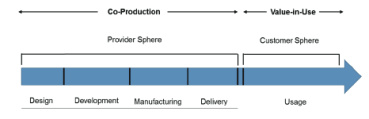
Source: Chang et al. (2017)
Value-in-use occurs when consumers use and experience firms’ products or services and create value in their own context (Grönroos and Voima, 2013; Lusch and Vargo, 2014; Ranjan and Read, 2016). From this view, firms can propose or facilitate value, but the final value is realized through consumers’ active use, interpretation, and experience of the provided resources. Ranjan and Read (2016) describe Experience, Personalization, and Relationship as important dimensions of value-in-use. Experience concerns the value that emerges from the consumer’s actual use and participation. Personalization reflects the extent to which the experience can be adapted to individual preferences and needs. Relationship concerns the connections that develop through continuing interactions with the service, content, firm, or other consumers. For example, consumers may use an AR service to create a personalized video with a virtual performer. In this situation, consumers are not primarily helping the firm design or deliver a product; rather, they create their own value through the use of AR content (Lin et al., 2025).
The distinction between co-production and value-in-use is important because the two forms of participation place consumers in different value-creation roles. Co-production focuses on consumers’ participation in firms’ activities, whereas value-in-use focuses on value created when consumers use and experience a service (Ranjan and Read, 2016). Study 1 therefore examines co-production in an AR-enabled product-design context, while Study 2 examines value-in-use in an AR content-creation context. This distinction provides the basis for comparing the dimensions proposed by the co-creation perspective with the psychological needs proposed by self-determination theory.
2.3 Self-determination theory
According to self-determination theory, human motivation can be classified into intrinsic motivation and extrinsic motivation (Deci and Ryan, 2000; Ryan and Deci, 2020). Intrinsic motivation is driven by individuals’ enjoyment, interest, or satisfaction in performing an activity, whereas extrinsic motivation is induced by external outcomes or rewards (De Charms, 2013). Self-determination theory suggests that consumers are more likely to voluntarily continue an activity when the activity itself supports their internal motivation. This perspective is relevant to AR because consumers often need to actively interact with the technology, make choices, and complete tasks. Therefore, the effectiveness of an AR service may depend not only on its technological functions or value-creation structure but also on whether the experience supports consumers’ intrinsic motivation.
An important question is how an external environment can stimulate intrinsic motivation. Self-determination theory argues that motivation is influenced by the interaction between individuals and the social or external environment (Ryan and Deci, 2020). Recent studies have similarly linked AR environments with intrinsic motivation, involvement, and positive behavioral responses (Kumar et al., 2024; Serravalle et al., 2023). Ryan and Deci (2020) identified three fundamental needs that influence the activation of intrinsic motivation. The first is the need for autonomy, which refers to the desire to have control over one’s own actions. Individuals’ need for autonomy is enhanced when they perceive that they are making decisions autonomously. The second is the need for competence, which refers to the desire to function effectively within the environment individuals face. The third is the need for relatedness, which refers to the extent to which individuals feel connected to others and experience a sense of belonging to other people or social groups. When an external environment satisfies these three psychological needs, intrinsic motivation is stimulated, thereby enhancing individuals’ sense of self-determination (Deci and Ryan, 2000; Ryan and Deci, 2020).
These three needs can be directly relevant when consumers actively participate through AR. Consumers may feel autonomy when an AR service allows them to choose and modify their preferred design or content. They may feel competence when AR helps them perform a design or creation task effectively, and they may experience relatedness when they feel connected with the brand, content, service, or interaction partner (Kumar et al., 2024; Lin et al., 2025). In this respect, the co-creation perspective and self-determination theory provide different explanations for consumers’ behavioral intentions. The co-creation perspective focuses on consumers’ participation in firms’ value-creation activities and on the value that consumers realize through their own use and experiences (Grönroos and Voima, 2013; Lusch and Vargo, 2014; Ranjan and Read, 2016). In contrast, self-determination theory focuses on whether an experience satisfies consumers’ fundamental psychological needs for autonomy, competence, and relatedness (Deci and Ryan, 2000; Ryan and Deci, 2020). Both perspectives can therefore explain positive consumer responses, but they explain those responses through different theoretical elements. Accordingly, this study compares the relative explanatory and predictive usefulness of the two perspectives across two forms of AR-enabled consumer participation. The constructs derived from the two perspectives are therefore examined as alternative theoretical predictors of consumers’ behavioral intentions rather than as intervening mechanisms in a mediation structure.
Ⅲ. Research Hypotheses
This study examines two forms of AR-enabled consumer participation. The first involves consumers’ participation in firms’ value-creation activities, such as product design, which represents a co-production context. The second involves consumers creating value through their own use and experience of AR content, which represents a value-in-use context. For each context, the constructs derived from the co-creation perspective are compared with the psychological needs proposed by self-determination theory.
In an AR-enabled co-production context, consumers can actively participate in firms’ activities by contributing their ideas, preferences, knowledge, and efforts to the value-creation process. According to the co-creation perspective, three key dimensions of co-production are knowledge, equity, and interaction (Ranjan and Read, 2016). Knowledge refers to the sharing of information, ideas, and resources between firms and consumers. When firms provide consumers with sufficient product information and opportunities to share their ideas, consumers can participate more effectively in the creation process. Equity reflects the extent to which consumers perceive that they have an appropriate and meaningful role in the value-creation process. Consumers are more likely to evaluate the experience positively when they believe that their preferences and contributions are considered important in determining the final outcome. Interaction refers to the communication and exchange that occur between firms and consumers during co-production. Interactive processes enable consumers to communicate their preferences and requirements and allow firms to respond to these inputs more effectively (Ranjan and Read, 2016; Rauschnabel et al., 2022; Söderström et al., 2024).
These dimensions can be particularly relevant when consumers participate in product design through AR. For example, an AR service may provide product information and design tools, allow consumers to modify product attributes according to their preferences, and facilitate interaction between consumers and the firm. When consumers perceive greater knowledge exchange, a more equitable role, and stronger interaction during this process, they are more likely to show positive behavioral intentions toward the product and the AR service. Therefore, the following hypotheses are proposed:
H1: In the context of consumers designing their own athletic shoes via an AR service, perceived knowledge exchange with the firm through the AR service is positively associated with consumers’ behavioral intentions, namely AR-assisted purchase intention, AR recommendation intention, and continued AR usage intention.
H2: In the context of consumers designing their own athletic shoes via an AR service, perceived equity in relation to the firm is positively associated with consumers’ behavioral intentions, namely AR-assisted purchase intention, AR recommendation intention, and continued AR usage intention.
H3: In the context of consumers designing their own athletic shoes via an AR service, perceived interactivity with the firm through the AR service is positively associated with consumers’ behavioral intentions, namely AR-assisted purchase intention, AR recommendation intention, and continued AR usage intention.
Self-determination theory provides another explanation for consumers’ behavioral intentions in an AR-enabled co-production context. According to self-determination theory, autonomy, competence, and relatedness are fundamental psychological needs that support intrinsic motivation and self-determined behavior (Deci and Ryan, 2000; Ryan and Deci, 2020). When consumers participate in product design through AR, autonomy can be enhanced because consumers have greater control over product attributes and design choices. Competence can be enhanced because AR enables consumers to visualize and modify their preferred designs more easily and effectively. Relatedness can also be strengthened when consumers feel connected with the brand, service, or design interaction through their participation in the creation process (Kumar et al., 2024; Ryan and Deci, 2020). Thus, the following hypotheses are proposed:
H4: In the context of consumers designing their own athletic shoes via an AR service, perceived autonomy induced by the AR service is positively associated with consumers’ behavioral intentions, namely AR-assisted purchase intention, AR recommendation intention, and continued AR usage intention.
H5: In the context of consumers designing their own athletic shoes via an AR service, perceived competence induced by the AR service is positively associated with consumers’ behavioral intentions, namely AR-assisted purchase intention, AR recommendation intention, and continued AR usage intention.
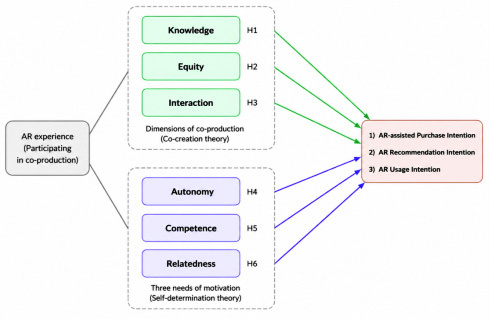
H6: In the context of consumers designing their own athletic shoes via an AR service, perceived relatedness induced by the AR service is positively associated with consumers’ behavioral intentions, namely AR-assisted purchase intention, AR recommendation intention, and continued AR usage intention.
The second form of AR-enabled consumer participation is value-in-use. In a value-in-use context, consumers create value through their own use, experience, and interpretation of a firm’s product or service rather than by directly participating in the firm’s production activities (Grönroos and Voima, 2013; Lusch and Vargo, 2014; Ranjan and Read, 2016). According to the co-creation perspective, experience, personalization, and relationship are important dimensions of value-in-use (Ranjan and Read, 2016). Experience reflects the unique value that consumers create through their interaction with a product or service. Personalization reflects the extent to which the experience can be adapted to consumers’ individual preferences and needs. Relationship reflects the ongoing connection that develops between consumers and the service, content, firm, or other users through repeated interaction.
AR can strengthen these dimensions by allowing consumers to create and interpret their own content experiences. For example, an AR service may allow consumers to record themselves interacting with a virtual performer and create a personalized video. In this process, consumers are not primarily contributing to the firm’s product-development process. Rather, they create their own value through the experience and use of the AR content. The more consumers perceive the experience as distinctive, personalized, and capable of supporting an ongoing relationship with the content or service, the more likely they are to show positive behavioral intentions (Lin et al., 2025; Ranjan and Read, 2016). Therefore, the following hypotheses are proposed:
H7: In the context of an AR service that enables consumers to dance with a virtual K-pop performer, perceived positive experience with the service is positively associated with consumers’ behavioral intentions, namely AR-assisted purchase intention, AR recommendation intention, and continued AR usage intention.
H8: In the context of an AR service that enables consumers to dance with a virtual K-pop performer, perceived personalization with the service is positively associated with consumers’ behavioral intentions, namely AR-assisted purchase intention, AR recommendation intention, and continued AR usage intention.
H9: In the context of an AR service that enables consumers to dance with a virtual K-pop performer, perceived relationship with the service is positively associated with consumers’ behavioral intentions, namely AR-assisted purchase intention, AR recommendation intention, and continued AR usage intention.
Self-determination theory also provides an alternative explanation for consumers’ behavioral intentions in an AR-enabled value-in-use context. When consumers actively create their own AR-based content, autonomy may be enhanced because they can choose and control their preferred experience. Competence may be enhanced when AR enables consumers to perform and complete a creative task effectively. Relatedness may also be strengthened when consumers feel connected with the content, service, virtual performer, or interaction partner. Accordingly, satisfying these psychological needs can strengthen consumers’ intrinsic motivation and lead to more positive behavioral responses toward the AR service (Kumar et al., 2024; Lin et al., 2025; Ryan and Deci, 2020). Thus, the following hypotheses are proposed:
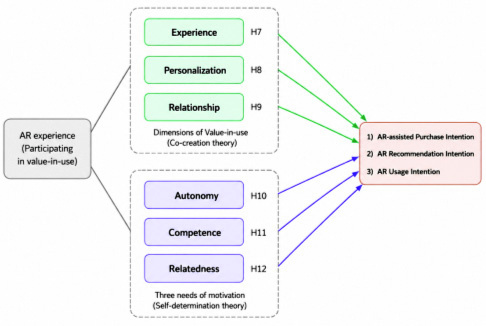
H10: In the context of an AR service that enables consumers to dance with a virtual K-pop performer, perceived autonomy induced by the AR service is positively associated with consumers’ behavioral intentions, namely AR-assisted purchase intention, AR recommendation intention, and continued AR usage intention.
H11: In the context of an AR service that enables consumers to dance with a virtual K-pop performer, perceived competence induced by the AR service is positively associated with consumers’ behavioral intentions, namely AR-assisted purchase intention, AR recommendation intention, and continued AR usage intention.
H12: In the context of an AR service that enables consumers to dance with a virtual K-pop performer, perceived relatedness induced by the AR service is positively associated with consumers’ behavioral intentions, namely AR-assisted purchase intention, AR recommendation intention, and continued AR usage intention.
The hypotheses concerning the AR-enabled co-production context (H1–H6) are examined in Study 1, whereas those concerning the AR-enabled value-in-use context (H7–H12) are examined in Study 2. The two theoretical perspectives are subsequently compared in terms of their relative explanatory and predictive usefulness.
Ⅳ. Methodology
4.1 Design, participants, and procedure
This study consists of two empirical studies examining different forms of AR-enabled consumer participation. Participants were recruited from populations with prior AR experience so that they could meaningfully evaluate the AR-based interactions presented in the studies. Prior AR research has also emphasized the importance of familiarity with AR and interactive retail technologies when consumers evaluate technology-mediated experiences (Hilken et al., 2017; Rauschnabel et al., 2022; Yim et al., 2017).
Study 1 was conducted as a video-based scenario survey. A total of 154 participants (Male: 52, Female: 102; Mage = 20.17, SD = 1.70, range = 18–30) were included in the analysis. Participants watched a video showing consumers designing Nike athletic shoes using an AR service and were asked to imagine themselves engaging in the experience (see Figure 4). After watching the video, participants responded to survey items measuring three dimensions of co-production (Knowledge, Equity, and Interaction), three psychological needs proposed by self-determination theory (Autonomy, Competence, and Relatedness), and three behavioral intentions (AR-assisted purchase intention, AR recommendation intention, and continued AR usage intention). Thus, Study 1 examined consumers’ evaluations of an imagined AR-enabled product-design experience rather than their direct use of an AR service.

Study 2 was conducted as a laboratory-based AR experience study. A total of 50 participants (Male: 27, Female: 23; Mage = 29.54, SD = 4.89, range = 22–45) participated in the study. Unlike Study 1, participants directly interacted with an AR service. During an approximately 30-minute individual session, participants used an AR service that enabled them to record a short dance video with a virtual female K-pop performer. Participants interacted with the AR interface, performed a dance alongside the virtual performer, and recorded the interaction as a video. After completing the AR experience, participants watched their recorded video and responded to survey items measuring three dimensions of value-in-use (Experience, Personalization, and Relationship), the three psychological needs of self-determination theory (Autonomy, Competence, and Relatedness), and the same three behavioral intentions examined in Study 1.
Because Study 2 involved individualized participation, real-time AR interaction, video recording, and post-experience evaluation, each participant completed an approximately 30-minute session. This resource-intensive procedure limited the feasible sample size. However, it enabled participants to directly interact with the AR service and create their own AR-based content, which was important for examining value-in-use in an actual AR experience.
Importantly, neither study manipulated experimental conditions or included a comparison group. Therefore, Study 1 is described as a video-based scenario survey, whereas Study 2 is described as a laboratory-based AR experience study, rather than referring to the two studies as experiments.
4.2 Measures and analytical procedures
All constructs were measured using seven-point Likert scales (1 = strongly disagree; 7 = strongly agree). The measurement items were adapted from established scales to reflect the AR contexts examined in the two studies. Autonomy, Competence, and Relatedness were adapted from La Guardia et al. (2000). The co-production dimensions of Knowledge, Equity, and Interaction and the value-in-use dimensions of Experience, Personalization, and Relationship were measured based on Ranjan and Read (2016). AR-assisted purchase intention was adapted from Pavlou and Fygenson (2006), AR recommendation intention from Zeithaml et al. (1996) and Hennig-Thurau et al. (2004), and continued AR usage intention from Sun et al. (2012). Table 1 presents the measurement items and their sources. The two items measuring AR-assisted purchase intention refer to consumers’ intentions to purchase products with the assistance of AR. Therefore, this construct is referred to as AR-assisted purchase intention throughout the study. Continued AR usage intention was measured using the three designated items assessing consumers’ intentions to continue using and participating in AR experiences.
<Table 1> Measurement items
| Construct (Cronbach’s α of Study 1; Study 2) | Measurement items | Sources | |
|---|---|---|---|
| Self-determination | Autonomy (.802; .893) | The AR experience I just had strongly matches my choices and interests. The AR experience I just had fits perfectly with the way I prefer to communicate. The AR experience I just had allows me to clearly express myself. The AR experience I just had makes me strongly feel that I have choices when communicating. | La Guardia et al., (2000) |
| Competence (.934; .904) | The AR experience I just had makes me feel that I can successfully complete the communication. The AR experience I just had makes me feel that I communicate very effectively. The AR experience I just had makes me feel that I can communicate very well. The AR experience I just had makes me feel that I can handle communication well. | ||
| Relatedness (.848; .855) | I feel comfortable when engaging in the AR experience I just had. I feel a sense of familiarity when engaging in the AR experience I just had. When engaging in the AR experience I just had, I feel that communication with the content works well. I feel very good when engaging in the AR experience I just had. | ||
| Co-production | Knowledge (.772) | The brand shown in the video can accept my ideas and suggestions for improving existing or new product development through augmented reality. The brand shown in the video provided me with sufficient images and information through augmented reality. Through the augmented reality experience, I would be willing to share ideas and suggestions with the brand and invest time and effort to help improve its products and processes. The brand shown in the video provided an appropriate environment and opportunity for me to offer ideas through augmented reality. | Ranjan and Read (2016) |
| Equity (.788) | The brand shown in the video can easily access information about my preferences. The brand shown in the video has processes that are aligned with the way I want things done. In the product creation process, I believe my role is as important as the company's role. I played an equal role with the brand shown in the video in determining the final outcome of the product creation process. | ||
| Interaction (.824) | While proposing ideas, augmented reality allowed me to conveniently express my specific requirements. The brand shown in the video provided consumers with information related to the idea-generation process through augmented reality. The brand shown in the video allowed sufficient consumer interaction in business processes (e.g., product development, marketing, customer support) through augmented reality. In order to obtain maximum benefits from the manufacturer, I needed to play an active role while engaging in augmented reality interactions (e.g., applying technology, knowledge, time, etc.). | ||
| Value-in-use | Experience (.756) | It seems that each user may experience the AR experience differently. The participation process in the AR experience may vary depending on what users attempt. | |
| Personalization (.748) | The value or enjoyment of the AR experience may differ from user to user. Through the AR experience, this content seems to attempt to meet the needs of individual users. Based on the AR experience, this content seems to involve users in product development differently depending on their preferences and knowledge. Based on the AR experience, this content seems to provide customers with an overall positive experience beyond mere functional benefits. | ||
| Relationship (.830) | To fully enjoy the AR experience, active interaction with this content seems necessary. Through the AR experience, users are likely to develop attachment to this content. The content providing this AR experience seems likely to have a user network or community composed of its fans. By providing this AR experience, this content seems likely to receive positive evaluations on social media. | ||
| Behaviors | AR-assisted Purchase Intention (.949; .890) | I will purchase products using augmented reality in the future. I will use augmented reality when purchasing this product/services in the future. | Pavlou and Fygenson (2006) |
| AR Recommendation Intention (.960; .909) | I would like to recommend augmented reality to my friends. I would like to tell others about the advantages of augmented reality. I would like to inform others about the benefits of augmented reality. | Zeithaml et al., (1996); Hennig-Thurau et al. (2004) | |
| AR Usage Intention (.959; .942) | I would like to share my ideas through an AR experience like the one I just had in the future. I would like to continue using an AR experience like the one I just had. I would like to keep participating in an AR experience like the one I just had. | Sun et al., (2012) | |

The reliability and validity of the measures were assessed separately for Study 1 and Study 2. Confirmatory factor analyses were conducted, and standardized factor loadings, Cronbach’s alpha, composite reliability (CR), and average variance extracted (AVE) were examined. Cronbach’s alpha and CR values exceeded .70 for all constructs, indicating satisfactory internal consistency. Most constructs showed acceptable convergent validity. However, Personalization in Study 2 showed an AVE of .443, which was below the recommended criterion of .50. Because its CR was acceptable and the items were theoretically grounded in the value-in-use framework, the construct was retained. Nevertheless, findings involving Personalization should be interpreted with caution. In addition, because the self-determination items were adapted from La Guardia et al. (2000) to the AR-mediated interaction contexts examined in this study, the communication-oriented wording of some items should be considered when interpreting the results. Tables 2 and 3 present the measurement properties for Study 1 and Study 2, respectively.
<Table 2> Measurement Properties for Study 1
| Construct | Items | Cronbach’s α | Factor Loading | CR | AVE | √AVE |
|---|---|---|---|---|---|---|
| Autonomy | Autonomy1 | .802 | .809 | .874 | .634 | .796 |
| Autonomy2 | .823 | |||||
| Autonomy3 | .802 | |||||
| Autonomy4 | .750 | |||||
| Competence | Competence1 | .934 | .890 | .955 | .840 | .917 |
| Competence2 | .924 | |||||
| Competence3 | .952 | |||||
| Competence4 | .899 | |||||
| Relatedness | Relatedness1 | .848 | .863 | .900 | .693 | .832 |
| Relatedness2 | .852 | |||||
| Relatedness3 | .731 | |||||
| Relatedness4 | .876 | |||||
| Knowledge | Knowledge1 | .772 | .727 | .863 | .612 | .782 |
| Knowledge2 | .751 | |||||
| Knowledge3 | .790 | |||||
| Knowledge4 | .855 | |||||
| Equity | Equity1 | .788 | .756 | .874 | .634 | .796 |
| Equity2 | .843 | |||||
| Equity3 | .819 | |||||
| Equity4 | .763 | |||||
| Interaction | Interaction1 | .824 | .798 | .886 | .660 | .812 |
| Interaction2 | .863 | |||||
| Interaction3 | .774 | |||||
| Interaction4 | .813 | |||||
| AR-assisted Purchase Intention | PI1 | .949 | .979 | .978 | .958 | .979 |
| PI2 | .979 | |||||
| AR Recommendation Intention | RI1 | .960 | .957 | .976 | .931 | .965 |
| RI2 | .971 | |||||
| RI3 | .967 | |||||
| AR Usage Intention | UI1 | .959 | .941 | .976 | .930 | .964 |
| UI2 | .974 | |||||
| UI3 | .978 |
Note: CR = Composite Reliability; AVE = Average Variance Extracted. All factor loadings exceeded the recommended threshold of .70.
<Table 3> Measurement Properties for Study 2
| Construct | Items | Cronbach’s α | Factor Loading | CR | AVE | √AVE |
|---|---|---|---|---|---|---|
| Autonomy | AUT1 | .893 | .678 | .896 | .686 | .828 |
| AUT2 | .882 | |||||
| AUT3 | .934 | |||||
| AUT4 | .821 | |||||
| Competence | COM1 | .904 | .751 | .906 | .707 | .841 |
| COM2 | .872 | |||||
| COM3 | .868 | |||||
| COM4 | .842 | |||||
| Relatedness | REL1 | .855 | .653 | .862 | .614 | .784 |
| REL2 | .839 | |||||
| REL3 | .912 | |||||
| REL4 | .744 | |||||
| Experience | EXP1 | .756 | .630 | .792 | .665 | .816 |
| EXP2 | .966 | |||||
| Personalization | PER1 | .748 | .583 | .758 | .443 | .666 |
| PER2 | .702 | |||||
| PER3 | .742 | |||||
| PER4 | .661 | |||||
| Relationship | RSH1 | .830 | .585 | .840 | .574 | .758 |
| RSH2 | .883 | |||||
| RSH3 | .822 | |||||
| RSH4 | .705 | |||||
| AR-assisted Purchase Intention | PI1 | .890 | .883 | .890 | .802 | .896 |
| PI2 | .907 | |||||
| AR Recommendation Intention | RI1 | .909 | .829 | .915 | .782 | .884 |
| RI2 | .949 | |||||
| RI3 | .884 | |||||
| AR Usage Intention | UI1 | .942 | .905 | .942 | .845 | .919 |
| UI2 | .929 | |||||
| UI3 | .917 |
Note: CR = Composite Reliability; AVE = Average Variance Extracted. Despite the relatively small sample size in Study 2 due to the resource-intensive laboratory-based AR procedure, the constructs demonstrated acceptable psychometric properties overall. Cronbach’s α and CR values exceeded the recommended threshold of .70. Although the AVE value for Personalization was slightly below the recommended criterion of .50, the construct was retained because its CR exceeded .70 and the measurement items were theoretically grounded (Fornell and Larcker, 1981).
Measurement-model fit was additionally assessed using six-factor confirmatory factor analyses of the focal theoretical constructs in each study. The models were estimated using normal-theory maximum likelihood, with factor variances fixed to one, freely estimated factor covariances, no cross-loadings, and uncorrelated measurement residuals. The 24-item model in Study 1 yielded χ2(237) = 658.58, CFI = .937, TLI = .927, RMSEA = .108, and SRMR = .077. The 22-item model in Study 2 yielded χ2(194) = 352.33, CFI = .901, TLI = .882, RMSEA = .129, and SRMR = .088. Overall model fit was limited in both studies, particularly in Study 2.
Discriminant validity was further assessed using construct correlations and the heterotrait–monotrait ratio (HTMT; Henseler et al., 2015). Most constructs in Study 1 showed acceptable separation, although the HTMT values for Equity–Interaction (.903) and AR-assisted Purchase Intention–Continued AR Usage Intention (.914) exceeded .90. Greater overlap was observed in Study 2, particularly for Autonomy–Competence (1.008), Personalization–Relationship (.976), and Relatedness–Relationship (.960). Because these constructs represent theoretically distinct concepts, they were retained in the analyses. Nevertheless, the relatively high HTMT values indicate that differences among some constructs, particularly in Study 2, should be interpreted cautiously.
Common method bias was assessed using multiple procedures because the focal variables were collected using self-report measures. Following Lindell and Whitney (2001), the survey included a theoretically unrelated three-item marker scale measuring respondents’ general preference for the color blue. The smallest observed correlation between the marker variable and the focal study variables was r = .04 in Study 1 and r = .06 in Study 2 (p > .05). These values were used to adjust the substantive correlations within each study for potential common method variance. After the adjustment, the magnitudes and significance levels of the major relationships among the focal variables remained substantively unchanged, with the major correlations remaining significant at p < .01. These results suggest that common method variance was unlikely to materially distort the substantive relationships observed in this study. As an additional diagnostic, a single-factor CFA was compared with the six-factor measurement model for the focal theoretical constructs (Podsakoff et al., 2003). The single-factor model showed significantly poorer fit than the proposed measurement model in both Study 1 (Δχ2 = 339.11, Δdf = 15, p < .001) and Study 2 (Δχ2 = 117.47, Δdf = 15, p < .001). Nevertheless, because the focal variables were measured using cross-sectional self-reports, the possibility of common method bias cannot be completely ruled out.
To test the hypotheses, multiple regression analyses were conducted using AR-assisted purchase intention, AR recommendation intention, and continued AR usage intention as dependent variables. In Study 1, AR preference, Nike brand preference, and athletic-shoe involvement were included as control variables because consumers’ prior preferences toward AR, the focal brand, and the product category could influence their behavioral intentions. The co-production model included Knowledge, Equity, and Interaction as the focal predictors, whereas the self-determination model included Autonomy, Competence, and Relatedness. In Study 2, AR familiarity, content awareness, and content involvement were included as control variables because prior familiarity with AR and the focal content could influence consumers’ evaluations. The value-in-use model included Experience, Personalization, and Relationship, whereas the self-determination model again included Autonomy, Competence, and Relatedness. AR familiarity, content awareness, and content involvement were used only as control variables and were not treated as dependent variables.
Because this study also aims to compare the relative usefulness of the co-creation and self-determination perspectives, the comparison was not based solely on adjusted R2. Akaike information criterion (AIC) and Bayesian information criterion (BIC) were additionally examined to compare model performance while considering model complexity. Predictive performance was assessed using repeated cross-validation. Repeated 10-fold cross-validation was used in Study 1, whereas repeated five-fold cross-validation was used in Study 2 because of its smaller sample size. In addition, combined models containing the predictors from both theoretical perspectives were estimated to examine whether combining the two sets of constructs provided additional explanatory and predictive value.
An additional repeated cross-validation analysis used 100 repetitions of 10-fold cross-validation in Study 1 and 100 repetitions of five-fold cross-validation in Study 2 (random seed = 20261009). Identical training–test splits were used across competing models and outcomes within each study. In each repetition, R2 was calculated from the pooled out-of-fold predictions for all participants, and the mean across repetitions was reported. For the AIC and BIC comparisons, each outcome was standardized using its full-sample mean and population standard deviation before model estimation.
Multicollinearity was assessed using variance inflation factors (VIFs). Because Study 2 had a relatively small sample and several constructs showed substantial overlap, additional analyses were conducted to examine the stability of its results. A sensitivity analysis was conducted for the multiple regression models. For Study 2, two-sided 95% percentile bootstrap confidence intervals for the standardized regression coefficients (β) were estimated using 5,000 participant-level case-resampling replications. Standardized coefficients were recalculated within each resample. HC3 heteroskedasticity-robust standard errors were also used, with two-sided tests based on a t distribution with 43 residual degrees of freedom. These additional analyses were used to evaluate the stability of the Study 2 estimates rather than as the primary basis for hypothesis testing.
Ⅴ. Empirical Results and Analysis
Study 1 tested H1–H6. In the co-production model, Knowledge had positive effects on all three behavioral intentions. Equity had a positive effect on AR-assisted purchase intention only, while Interaction had positive effects on AR-assisted purchase intention and AR recommendation intention. Thus, H1 was supported, whereas H2 and H3 were partially supported. In the self-determination model, Autonomy had a significant effect only on AR recommendation intention, while Competence and Relatedness had positive effects on all three behavioral intentions. Therefore, H4 was partially supported, and H5 and H6 were supported. Table 4 presents the standardized coefficients and test statistics.
<Table 4> Results of Study 1
| Independent Var. | Dependent Variables | ||
|---|---|---|---|
| Self-Determination | AR-assisted Purchase Intention β (t) | Recommendation Intention β (t) | AR Usage Intention β (t) |
| Autonomy | .076 (.96) | .203* (2.25) | .139 (1.89) |
| Competence | .498** (6.07) | .288** (3.08) | .341** (4.48) |
| Relatedness | .300** (3.87) | .255** (2.88) | .401** (5.55) |
| Adjusted R2 | .627 | .516 | .677 |
| Co-Production | AR-assisted Purchase Intention β (t) | Recommendation Intention β (t) | AR Usage Intention β (t) |
| Knowledge | .345** (3.97) | .360** (4.13) | .436** (5.26) |
| Equity | .179* (1.98) | .096 (1.06) | .163 (1.90) |
| Interaction | .221* (2.30) | .200* (2.07) | .113 (1.23) |
| Adjusted R2 | .462 | .458 | .511 |
* p< .05; ** p<.01
Note: Standardized coefficients (β) are reported, with t-values shown in parentheses. Control variables included AR preference, brand preference, and product involvement. All significance tests were two-tailed.
The maximum VIF in Study 1 was 2.75, indicating no multicollinearity issue. The two theoretical models were also compared using AIC, BIC, and repeated 10-fold cross-validated R2. For all three behavioral intentions, the self-determination model showed lower AIC and BIC values and higher cross-validated R2 values than the co-production model. A combined model slightly increased adjusted R2 and predictive performance, with the main unique effects found for Competence, Relatedness, and, for recommendation and continued usage intentions, Knowledge. These results indicate relatively stronger explanatory and predictive usefulness of self-determination theory in the AR-enabled co-production context examined in Study 1.
Study 2 tested H7–H12 with AR familiarity, content awareness, and content involvement as control variables. In the value-in-use model, Experience did not positively predict any outcome and showed a negative association with AR recommendation intention; Personalization positively predicted AR recommendation intention only; and Relationship positively predicted all three outcomes in the primary OLS estimates. Thus, H7 was not supported, H8 was partially supported, and H9 was supported in the primary analysis. In the self-determination model, Autonomy was nonsignificant; Competence predicted AR recommendation intention only; and Relatedness positively predicted all three outcomes. Therefore, H10 was not supported, H11 was partially supported, and H12 was supported in the primary analysis.
Because Study 2 had a relatively small sample and several variables were highly related, additional analyses were conducted. The maximum VIF was 3.24 in the value-in-use model and 6.34 in the self-determination model, indicating that multicollinearity required greater caution in Study 2. A sensitivity analysis showed that, with n = 50 and six predictors, the study had 80% power only for effects of approximately f2 = .314 or larger.
The 95% percentile bootstrap confidence intervals for the standardized regression coefficients excluded zero for the associations of Relationship with AR recommendation intention [0.349, 0.886] and continued AR usage intention [0.223, 1.066], for the association of Personalization with AR recommendation intention [0.041, 0.547], and for the association of Relatedness with continued AR usage intention [0.076, 0.740].
With HC3 heteroskedasticity-robust standard errors, the associations of Relationship with AR recommendation intention (β = .630, p < .001) and continued AR usage intention (β = .653, p = .033), as well as the association of Personalization with AR recommendation intention (β = .292, p = .025), remained statistically significant. In contrast, the association of Relatedness with continued AR usage intention did not reach the .05 significance level (β = .466, p = .052). None of the other focal predictor–outcome associations that were significant in the primary OLS analyses remained significant at the .05 level under HC3. Taken together, the bootstrap and HC3 analyses provided consistent support for the associations of Relationship with recommendation and continued usage intentions and of Personalization with recommendation intention.
<Table 5> Results of Study 2
| Independent Var. | Dependent Variables | ||
|---|---|---|---|
| Self-Determination | AR-assisted Purchase Intention β (t) | Recommendation Intention β (t) | AR Usage Intention β (t) |
| Autonomy | -.213 (-.99) | .074 (.33) | .272 (1.24) |
| Competence | .367 (1.79) | .486* (2.28) | .160 (.77) |
| Relatedness | .307* (2.21) | .304* (2.10) | .466** (3.32) |
| Adjusted R2 | .637 | .605 | .629 |
| Value-in-Use | AR-assisted Purchase Intention β (t) | Recommendation Intention β (t) | AR Usage Intention β (t) |
| Experience | -.009 (-.09) | -.176* (-2.04) | -.188 (-1.90) |
| Personalization | .012 (.08) | .292* (2.42) | .197 (1.43) |
| Relationship | .337* (2.12) | .630** (5.03) | .653** (4.55) |
| Adjusted R2 | .606 | .757 | .681 |
* p< .05; ** p<.01
Note: Standardized coefficients (β) are reported, with t-values shown in parentheses. Control variables included AR familiarity, content awareness, and content involvement. All significance tests were two-tailed.
Table 6 compares the relative explanatory and predictive performance of the theoretical models. In Study 1, the self-determination model showed lower AIC and BIC values and higher cross-validated R2 values than the co-production model for all three behavioral intentions. The combined model produced modest additional gains in adjusted R2, AIC, and cross-validated R2, but its BIC values were higher than those of the self-determination model. This pattern suggests that adding the co-production variables provided limited incremental value once model complexity was considered.
<Table 6> Model Comparison Results
| Outcome | Model | Adjusted R2 | AIC | BIC | Cross-validated R2 |
|---|---|---|---|---|---|
| Study 1 | |||||
| Purchase | Co-Production | .462 | 349.36 | 370.62 | .427 |
| Self-Determination | .627 | 293.07 | 314.33 | .600 | |
| Combined | .647 | 287.26 | 317.63 | .613 | |
| Recommendation | Co-Production | .458 | 350.42 | 371.68 | .416 |
| Self-Determination | .516 | 333.13 | 354.39 | .472 | |
| Combined | .547 | 325.82 | 356.19 | .486 | |
| AR Usage | Co-Production | .511 | 334.60 | 355.86 | .478 |
| Self-Determination | .677 | 270.90 | 292.16 | .651 | |
| Combined | .698 | 263.23 | 293.60 | .665 | |
| Study 2 | |||||
| Purchase | Value-in-Use | .606 | 102.80 | 116.18 | .470 |
| Self-Determination | .637 | 98.70 | 112.09 | .493 | |
| Combined | .620 | 103.32 | 122.44 | .407 | |
| Recommendation | Value-in-Use | .757 | 78.71 | 92.09 | .683 |
| Self-Determination | .605 | 102.91 | 116.29 | .453 | |
| Combined | .767 | 78.96 | 98.08 | .635 | |
| AR Usage | Value-in-Use | .681 | 92.22 | 105.61 | .539 |
| Self-Determination | .629 | 99.73 | 113.12 | .477 | |
| Combined | .701 | 91.39 | 110.51 | .501 | |
Note: Lower AIC and BIC values indicate better model fit after accounting for model complexity, while higher cross-validated R2 indicates better predictive performance. Cross-validated R2 is the mean across 100 repetitions of 10-fold cross-validation in Study 1 and five-fold cross-validation in Study 2; within each repetition, R2 was calculated from the pooled out-of-fold predictions. Combined models include predictors from both theoretical perspectives. Purchase intention refers to AR-assisted purchase intention; AR usage intention refers to continued AR usage intention.
In Study 2, the relative performance of the two perspectives differed by behavioral outcome. Self-determination showed better performance for AR-assisted purchase intention, whereas value-in-use showed better performance for recommendation intention and AR usage intention. The combined model did not consistently improve BIC or cross-validated performance. Given the small sample and the overlap among several constructs in Study 2, these model-comparison results should be interpreted cautiously.
Ⅵ. Conclusion and Implications
6.1 Summary of Findings
This study examined consumers as active participants in AR-enabled value creation and compared the co-creation perspective with self-determination theory across two empirical studies. Study 1 examined an AR-enabled co-production context using a video-based product-design scenario with 154 participants. The self-determination model showed stronger explanatory and predictive performance than the co-production model across the three behavioral intentions, although Knowledge also contributed to consumer responses. Study 2 examined an AR-enabled value-in-use context through a direct laboratory AR experience with 50 participants. The relative performance of the two theoretical perspectives differed depending on the behavioral outcome: self-determination showed better model performance for AR-assisted purchase intention, whereas value-in-use showed better performance for AR recommendation and continued AR usage intentions. Relationship and Relatedness were particularly relevant to recommendation and continued usage, although the small sample and construct overlap in Study 2 require cautious interpretation. Overall, the findings suggest that co-creation and self-determination provide different but partly overlapping explanations of consumers’ behavioral intentions in AR-enabled participation contexts.
6.2 Theoretical Implications
This study offers several theoretical implications for academics interested in studying how consumers’ AR experiences influence their positive behavioral intentions. First, this study extends AR marketing research beyond the conventional focus on shopping assistance. Previous studies have mainly examined the technological characteristics of AR and consumers’ responses to virtual try-on, product visualization, usefulness, enjoyment, telepresence, and engagement. The current study instead focuses on situations in which consumers participate in firms’ activities or create value through their own AR use. In doing so, it broadens the role of the consumer from a user of AR-assisted shopping tools to an active participant in AR-enabled value creation.
Second, this study compares the co-creation perspective and self-determination theory as alternative explanations of consumers’ behavioral intentions in AR-enabled participation. The co-creation perspective emphasizes consumers’ participation in firms’ activities and the value realized through use, whereas self-determination theory emphasizes the satisfaction of autonomy, competence, and relatedness. Study 1 showed relatively stronger model performance for self-determination in the co-production context. In Study 2, however, the relative usefulness of the two perspectives differed across outcomes. These findings do not suggest that one perspective universally dominates the other. Rather, they indicate that resource- and value-creation factors and psychological need satisfaction may differ in their relative importance depending on the form of AR participation and the behavioral outcome considered.
Third, this study strengthens the theoretical comparison by using several model-comparison procedures rather than relying only on adjusted R2. AIC, BIC, repeated cross-validation, and combined-model analyses provide additional evidence about the relative explanatory and predictive usefulness of the two perspectives. At the same time, the discriminant-validity results show substantial overlap among several Study 2 constructs, particularly between theoretically related relational and psychological variables. This overlap suggests that future research should examine more carefully how concepts such as Relatedness, Relationship, Personalization, Autonomy, and Competence can be distinguished in AR-mediated experiences.
6.3 Managerial Implications
This study also provides practical implications for firms that use AR to involve consumers in marketing and value-creation activities. First, the results of Study 1 suggest that firms should consider consumers’ psychological experience as well as the functional features of AR when designing product-related participation activities. Competence and Relatedness were positively associated with all three behavioral intentions, while Knowledge also showed consistent positive associations with consumer responses. These findings suggest that AR-based product-design services should not simply provide consumers with more options or technological functions. Consumers should be able to understand what they can do with the service, feel capable of completing the task, and receive sufficient information to make meaningful design or product-related decisions. In this sense, the effectiveness of AR participation may depend not only on the technological sophistication of the service but also on whether consumers feel that they can participate comfortably and effectively.
The findings also have implications for the way firms manage consumer participation in product-design and customization activities. The co-production results show that Knowledge was more consistently related to behavioral intentions than Equity and Interaction. This suggests that simply allowing consumers to participate may not be sufficient. Firms may need to make the consumer’s role in the process clear and provide the information necessary for consumers to contribute effectively. At the same time, the relatively stronger performance of the self-determination model in Study 1 indicates that firms should pay attention to how consumers experience participation psychologically. AR services that technically provide opportunities for participation may not necessarily generate positive responses if consumers feel that the task is difficult, unfamiliar, or disconnected from them. Therefore, managers should consider both the structure of participation and consumers’ psychological experience when designing AR-enabled co-production activities.
Second, the Study 2 findings suggest a somewhat different managerial priority in value-in-use contexts. When consumers directly used AR to create their own content experience, Relationship and Relatedness were especially relevant to recommendation and continued AR usage intentions. The value-in-use model also showed better model performance than the self-determination model for these two outcomes. These findings suggest that firms providing experiential AR services should consider how the service can encourage consumers to perceive the experience as something with which they can develop an ongoing connection, rather than treating AR as a one-time technological experience. In such contexts, continued use and recommendation may depend not only on whether the service is entertaining or personalized but also on whether consumers feel connected with the content, service, or interaction surrounding the experience.
More broadly, the results indicate that firms may need to adopt different priorities depending on how consumers participate through AR. When AR is used to involve consumers in firm-related activities such as product design or customization, helping consumers feel capable and providing sufficient knowledge may be particularly important. When AR is used primarily for consumers to create and experience value for themselves, relational aspects of the experience may become more important for recommendation and continued usage. Thus, firms should not assume that the same AR design strategy will be equally effective across different participation contexts. Instead, managers should first consider what role consumers are expected to play in the AR experience and then determine whether the service should place greater emphasis on effective participation, psychological need support, or relationship-building aspects of the experience.
Finally, these implications should be interpreted with appropriate caution. Study 2 was based on a relatively small sample, and several constructs showed substantial overlap. The robustness analyses also indicated that the findings for recommendation and continued AR usage were more stable than those for AR-assisted purchase intention. Therefore, the Study 2 findings are more useful for identifying possible design priorities than for prescribing specific AR features or implementation strategies. Firms should test how these principles operate in their own product categories and AR environments before making large-scale implementation decisions.
6.4 Limitations and Future Research
Despite its theoretical and managerial contributions, this study has several limitations. First, Study 2 included only 50 participants because the laboratory-based AR procedure required individualized participation, real-time interaction, and video recording. The sensitivity and robustness analyses indicate that several estimates were not stable enough to support strong conclusions. Therefore, the Study 2 findings should be considered preliminary and replicated with a larger sample. The counterintuitive negative coefficient for Experience on AR recommendation intention should be interpreted cautiously, as the small Study 2 sample and correlations among the value-in-use constructs may have produced a suppression effect or unstable partial regression estimate rather than a substantive negative effect. Second, the two studies differed not only in the form of participation but also in stimulus mode, immersion, focal content, sample composition, and control variables. Differences between the two studies therefore cannot be attributed solely to co-production versus value-in-use. Future research should compare the two participation forms under more comparable research conditions. Third, all focal variables were measured using cross-sectional self-reports. Although the marker-variable analysis and single-factor CFA provided supplementary evidence that common method variance was unlikely to materially distort the results, this concern cannot be completely eliminated because the focal variables were collected using cross-sectional self-report measures. Future research could use temporal separation, behavioral outcomes, marker variables, or experimental manipulations. Fourth, Personalization in Study 2 showed marginal convergent validity, and several constructs showed high HTMT values. The communication-oriented adaptation of the self-determination items and the general wording of AR-assisted purchase intention also limit content validity. Future studies should develop task-specific measures and distinguish relational and psychological constructs more clearly. Finally, the studies were conducted with Korean consumers, and Study 1 was concentrated among younger participants. Future research should replicate the findings across different age groups, product categories, AR applications, and cultural contexts.
저자 약력
∙ Jeongbin Whang is an Assistant Professor of Marketing in the Department of Business Administration, College of Economics and Commerce, Jeju National University, Jeju, Republic of Korea. He received his B.A. and M.A. in Music and Business Administration from the University of Seoul, and his Ph.D. in Business Administration from Korea University. He has served as an Assistant Professor at Jeju National University since completing his doctoral degree. His research interests include digital marketing strategy, corporate innovation, and the relationship between ESG and organizational capabilities.
∙ Ji Hee Song is a Professor of Marketing at the University of Seoul. She earned her Ph.D. from the University of Georgia and her MBA and BA in Economics from Korea University. She currently serves as the Editor-in-Chief of the International Telecommunications Policy Review and previously served as the Editor-in-Chief of the Asia Marketing Journal. Her research interests include interactive marketing, Consumer-AI interaction, Digital and AI transformation, and retail technology.
∙ Boreum Choi is an Associate Professor at the Graduate School of Information, Yonsei University, Seoul, Republic of Korea. She received her B.S. from the College of Engineering and her M.A. from the Interdisciplinary Program in Cognitive Science at Yonsei University and earned her M.S. and Ph.D. in Business Administration from Carnegie Mellon University, USA. Before joining Yonsei University, she held faculty positions at the School of Technology Management at UNIST and the School of Business Administration at the University of Seoul. Her research interests include AI innovation, digital transformation, platform business, and deep tech ecosystems.