
.jpeg)
Follower–Leader Collectivism Fit and Performance: LMX Mediation and Inter-Team Competition Moderation
* 계명대학교, 경영대학 경영학과 (Keimyung University, Department of Business Administration)
** 한양대학교, 에리카캠퍼스 경상대학 경영학부 (Hanyang University, The School of Business Administration, ERICA Campus)
**교신저자: 박경원 (kwp@hanyang.ac.kr)
DOI: https://doi.org/10.17287/kmr.2026.55.3.1103
Abstract
This study examines the effects of follower–leader congruence in collectivism on in-role performance, with leader–member exchange (LMX) as a mediating mechanism and perceived inter-team competition as a boundary condition. Based on person–environment fit and similarity–attraction theories, it hypothesizes that collectivism congruence enhances LMX, thereby improving performance. Data were collected from 307 employees (256 followers and 51 leaders) in a Chinese energy company. Results show that congruence in collectivism between followers and leaders enhances LMX quality, which positively influences in-role performance. Moreover, perceived inter-team competition moderates the indirect relationship between collectivism congruence and performance via LMX. These findings extend the person–supervisor fit literature by clarifying the mechanism linking value congruence to performance and emphasizing contextual influences.
이 논문은 한양대학교 교내연구지원 사업으로 연구됨(HY-2024-1795).
Ⅰ. Introduction
Person–environment fit theory posits that congruence between individuals and their environments fosters positive outcomes, while incongruence leads to adverse effects (Kristof–Brown et al., 2005). Individuals who experience high congruence in values with their organizations are likely to have high job satisfaction, job engagement, organizational citizenship behavior (OCB), and performance (e.g., Edwards and Cable, 2009; Verquer et al., 2003; Vila-Vázquez et al., 2023; Watanabe et al., 2024). Among the various environmental factors individuals interact with, leaders are an important factor that shapes individual outcomes in the workplace because they manage key resources and control opportunities that are important for followers’ career development (Zhang et al., 2012).
Based on person-environment fit theory, previous studies have investigated the effects of person-supervisor fit with their deep-level attributes. Researchers have examined congruence between followers and leaders in personality traits, such as proactive personality (Zhang et al., 2012), regulatory focus (Park and Cho, 2020) and humility (Shaw and Mao, 2021). Value alignment has also been explored with constructs, such as power distance (Guzman and Fu, 2022) and the four universal value dimensions (e.g., self-enhancement, self-transcendence, conservation, and openness to change) (Byza et al., 2019). Evidence from these studies indicates that follower-leader congruence has a significant impact on follower outcomes.
Among the deep-level attributes, this study focuses on collectivism, one of the values identified by Hofstede's model (Hofstede, 2001). Collectivism, defined as the tendency to prioritize group goals and collaborative efforts over individual interests (Triandis, 2001), shapes workplace relationships and performance outcomes in organizations. Collectivism is particularly relevant to the formation of leader-member exchange (LMX), as LMX fundamentally reflects a relational and social exchange process grounded in mutual obligation, trust, and goal alignment (Anand et al., 2011; Graen and Uhl-Bien, 1995). Compared to other cultural values such as power distance or uncertainty avoidance—which primarily shape hierarchical acceptance or preferences for structure—collectivism more directly influences how individuals approach interpersonal relationships and shared responsibilities.
Previous research has investigated the effects of collectivism on cooperation (e.g., Marcus and Le, 2013; Wagner III, 1995) and group creativity (Goncalo and Staw, 2006). However, relatively little attention has been paid to the effects of collectivism congruence between followers and leaders on follower outcomes. Given that followers with high collectivism have high motivation to attain collective goals (Oyserman et al., 2002) and pursue resources and leader support, leaders are instrumental in helping them achieve these goals. In this sense, when followers and leaders share similar levels of collectivism, it can lead to enhanced mutual understanding, shared work orientation and goals, and more effective communication. This alignment is particularly important in team-based organizations, where having similar levels of collectivism can optimize leadership effectiveness, enhance follower motivation, and ultimately foster performance.
This study advances our understanding of how follower-leader alignment in collectivistic values influences in-role performance through the mediating mechanism of leader-member exchange (LMX), incorporating insights from person-environment fit theory (Kristof‐Brown et al., 2005) and similarity-attraction theory (Byrne, 1971). In addition, this study introduces perceived inter-team competition as a contextual moderator, further enriching the model by accounting for boundary conditions. This study makes several important contributions. First, it provides insights into the interplay between follower and leader collectivism, showing how the (in)congruence affects LMX quality and subsequent performance. Second, by identifying LMX as a mediating factor, it deepens our understanding of the mechanisms through which value congruence influences individual outcomes. Finally, by examining the moderating and moderated mediation effects of perceived inter-team competition, this study sheds light on how contextual factors can shape the impact of value congruence on performance.
Ⅱ. Model Development and Hypotheses
Person-supervisor fit theory assumes that when an individual fits with a supervisor in values or characteristics, followers are likely to perform better than others (Hoffman and Woehr, 2006; Kristof‐Brown et al., 2023; Kristof‐Brown et al., 2005). Building on this perspective, this study suggests that follower–leader similarity in collectivism fosters effective communication, goal alignment, and shared work orientations, thereby promoting high-quality LMX. LMX refers to the dyadic relationship between leader and follower, which varies in quality across subordinates due to leaders’ limited time and resources (Anand et al., 2011; Graen and Uhl-Bien, 1995). High-quality LMX is characterized by both formal and informal exchanges, while low-quality LMX tends to be limited to formal interactions (Anand et al., 2011; Martin et al., 2016; Park et al., 2021; Yang and Koo, 2005).
When followers and leaders share similar collectivistic orientations, their interactions often become more seamless and collaborative. Drawing on similarity-attraction theory (Byrne, 1971), individuals are naturally inclined to engage with others who reflect similar values and attributes, fostering a shared sense of understanding and ease in communication. Consequently, congruence in collectivism between a follower and a leader enhances their perception of mutual similarity. This perception encourages more frequent interactions and communication, which in turn develop mutual understanding (Mumtaz and Rowley, 2020) and improve the prediction of each other’s behavioral intentions (Edwards and Cable, 2009; Oren et al., 2012). Such frequent communication and mutual understanding are likely to result in high-quality LMX (Anand et al., 2011; Oren et al., 2012). Second, aligned collectivistic values between followers and leaders can streamline goal-setting processes and create a cohesive work environment (Edwards and Cable, 2009), thereby strengthening the quality of LMX. When there is congruence in collectivism between these two parties, they better understand each other’s role expectations and work orientations. This mutual understanding reduces the need for leaders to expend time and effort clarifying expectations and managing potential conflicts (Edwards and Cable, 2009). Specifically, when leaders and followers are congruent in high collectivism, they prioritize team or organizational goals over individual interests. This shared focus on collective achievements may facilitate goal congruence (Schreuder et al., 2023), and facilitates the coordination of efforts and resources. Goal congruence and coordination foster the development of high-quality LMX (Zhang et al., 2012). Conversely, when both leader and follower share low levels of collectivism, they mutually recognize each other’s desire for individual achievement and autonomy. They strive to agree on goals that satisfy both individual interests and mutual objectives. Agreement on goals, shared understanding, and regular interaction can also foster high-quality relationships.
The combination of frequent communication, mutual understanding, and goal alignment fosters the development of high-quality LMX. Prior research on person-supervisor fit supports this argument, showing that when leaders and followers are congruent in values, they tend to develop positive relationships (Marstand et al., 2018) and that followers are more likely to engage in positive behaviors through trust in their leaders (Bao et al., 2021). Other studies on leader-follower goal congruence have also indirectly supported this argument by demonstrating positive outcomes, including high LMX (Kim et al., 2018), high organizational commitment (Colbert et al., 2008; Yasin et al., 2023) and satisfaction with both leaders and jobs (Colbert et al., 2008). Although goal alignment and shared role expectations are not directly measured in the present study, we draw on prior theory and evidence to infer that collectivism congruence fosters them, thereby facilitating high-quality LMX. Hence, this study hypothesizes that the greater congruence leaders and followers have in collectivism, the higher the quality of LMX they will achieve.
Hypothesis 1: LMX quality is higher when there is congruence in collectivism between followers and leaders compared to incongruence.
Congruence in collectivism between followers and leaders can occur at both high and low levels, but the implications for their dyadic relationship may differ significantly. Employees high in collectivism tend to prioritize team goals and collaboration (Oyserman et al., 2002). When both follower and leader are highly collectivistic, they are more likely to align in work orientation and goal pursuit, which strengthens mutual understanding and fosters high-quality LMX (Edwards and Cable, 2009). In contrast, congruence at low levels of collectivism may involve a mutual focus on personal goals over shared interests. While such dyads may experience fewer conflicts due to their individualistic preferences, the lower emphasis on collective goals may limit the depth of their relationship. Therefore, although LMX quality may still be positive under low collectivism congruence, it is likely to be stronger when both parties share high collectivistic values. This study thus hypothesizes that the quality of LMX will vary based on the level of collectivism congruence, with higher-quality LMX expected when congruence occurs at high collectivism.
Hypothesis 2: LMX quality is higher when congruence occurs at high levels of collectivism rather than low levels.
Next, incongruence can arise in two cases: one where followers have high collectivism, but leaders have low collectivism, and another where followers have low collectivism, but leaders have high collectivism. Drawing on role theory (Kahn et al., 1964), this study argues that these two forms of incongruence have asymmetric implications for LMX quality, such that the negative effect is stronger when leaders’ collectivism exceeds that of their followers.
In the case where a follower’s collectivism surpasses that of a leader, the higher collectivism may be perceived as beneficial by the leader. The follower’s efforts toward team goals and the common good (Oyserman et al., 2002; Triandis, 2001) contribute to team performance, which benefits the leader. Leaders may leverage the followers’ contributions to enhance their efficiency, as they do not have to expend as much effort managing highly collectivistic followers in completing teamwork. This saved energy or effort can then be used to focus on their personal interests. Furthermore, from a role perspective, followers’ collectivistic behaviors remain discretionary and do not impose role expectations on leaders, thereby posing little risk to the exchange relationship.
On the other hand, when leaders have high collectivism, they may pressure followers to prioritize teamwork over personal interests. As role senders, leaders are positioned to communicate and reinforce role expectations regarding appropriate task behaviors and priorities (Kahn et al., 1964). Leaders high in collectivism are therefore more likely to expect followers to prioritize collective goals and teamwork over personal interests. From a role theory perspective, such expectations can create role conflict for followers low in collectivism. Leaders may employ a more directive management style to manage these followers, which may cause discomfort for followers when working with such leaders (Pizzolitto et al., 2023). Overall, this study expects higher LMX quality when followers are more collectivist than leaders, compared to when leaders are more collectivist than followers. Thus, this study hypothesizes that:
Hypothesis 3: LMX quality is higher when a follower’s collectivism exceeds that of the leader, compared to when the leader’s collectivism exceeds the follower.
2.1 The Mediating Role of LMX
The relationship between LMX and in-role performance has been shown to be positively associated (e.g., Casimir et al., 2014; Joo, 2012). In-role performance is defined as activities typically outlined in a job description and indicates the degree to which employees fulfill these responsibilities (Rich et al., 2010; Williams and Anderson, 1991). LMX theory posits that leaders provide in-group followers with increased resources and strong support, which can lead to enhanced job performance (Graen and Uhl-Bien, 1995). This theoretical proposition is supported by empirical evidence; a meta-analysis by Martin et al. (2016) found positive associations between LMX and performance.
Building on Hypothesis 1, which highlights the effects of follower-leader congruence in collectivism on LMX and the positive association between LMX and in-role performance, this study proposes that the congruence effect on follower in-role performance is mediated by LMX. Accordingly, this study hypothesizes that LMX mediates the relationship between follower-leader collectivism congruence and in-role performance.
Hypothesis 4. The effect of follower-leader collectivism congruence/incongruence on follower in-role performance is mediated through LMX.
2.2 Moderating Role of Perceived Inter-team Competition
Inter-team competition can moderate the relationship between LMX and in-role performance. This competition occurs when different teams pursue mutually exclusive goals, meaning that achieving one team’s objectives inherently limits or prevents other teams from achieving theirs (Baer et al., 2010). Organizations often employ inter-team competition as a strategy to enhance team performance (Beersma et al., 2003; Pfeffer and Sutton, 2000). When followers perceive a high level of inter-team competition, this perception motivates them to focus more on their tasks and roles, as they recognize they are competing with other teams for resources, both monetary and non-monetary. Given the strong connection between team performance and individual in-role performance, followers are likely to enhance their team’s performance by fulfilling their job responsibilities.
In particular, when followers have high LMX quality with their leaders, they recognize that team performance is important for both themselves and their leaders. This is because a key responsibility of team leaders is to enhance team performance by effectively managing team members (Zaccaro et al., 2001). When followers with high LMX quality perceive a high level of inter-team competition, they are likely to devote greater effort to meeting their leaders’ expectations. This increased effort is aimed at competing effectively with other teams (Beersma et al., 2003) and maintaining their high-quality relationships with their leaders. On the other hand, followers who perceive low inter-team competition may still strive to fulfill their role expectations, but the intensity of their efforts will likely be lower than in high-competition settings. This is because they do not perceive achieving team goals as being as challenging as it would be under high levels of inter-team competition. Thus, this study hypothesizes:
Hypothesis 5. Perceived inter-team competition positively moderates the relationship between LMX and follower in-role performance.
The indirect relationship between follower-leader collectivism congruence and in-role performance through LMX will be moderated by perceived inter-team competition. When followers perceive high inter-team competition, this indirect effect will be stronger than when they perceive low competition. In high-competition contexts, shared collectivistic values between followers and leaders become more salient and valuable in fostering team performance. Followers are likely to strive to fulfil their job responsibilities as a way to demonstrate their dedication to their leaders and team. This increased focus on individual contributions aligns with the team’s competitive goals. In low-competition contexts, the impact of LMX on in-role performance tends to weaken, as fulfilling job responsibilities becomes less challenging compared to high-competition contexts. Therefore, the indirect effect of follower-leader collectivism congruence may diminish. The urgency to excel in individual roles decreases when competitive pressures are low, leading to a weaker translation of shared collectivistic values into performance outcomes. Therefore, this study proposes a moderated mediation hypothesis: Hypothesis 6. Perceived inter-team competition moderates the indirect effect of follower-leader congruence in collectivism on follower in-role performance via LMX, such that the indirect effect is stronger when perceived inter-team competition is high rather than low.
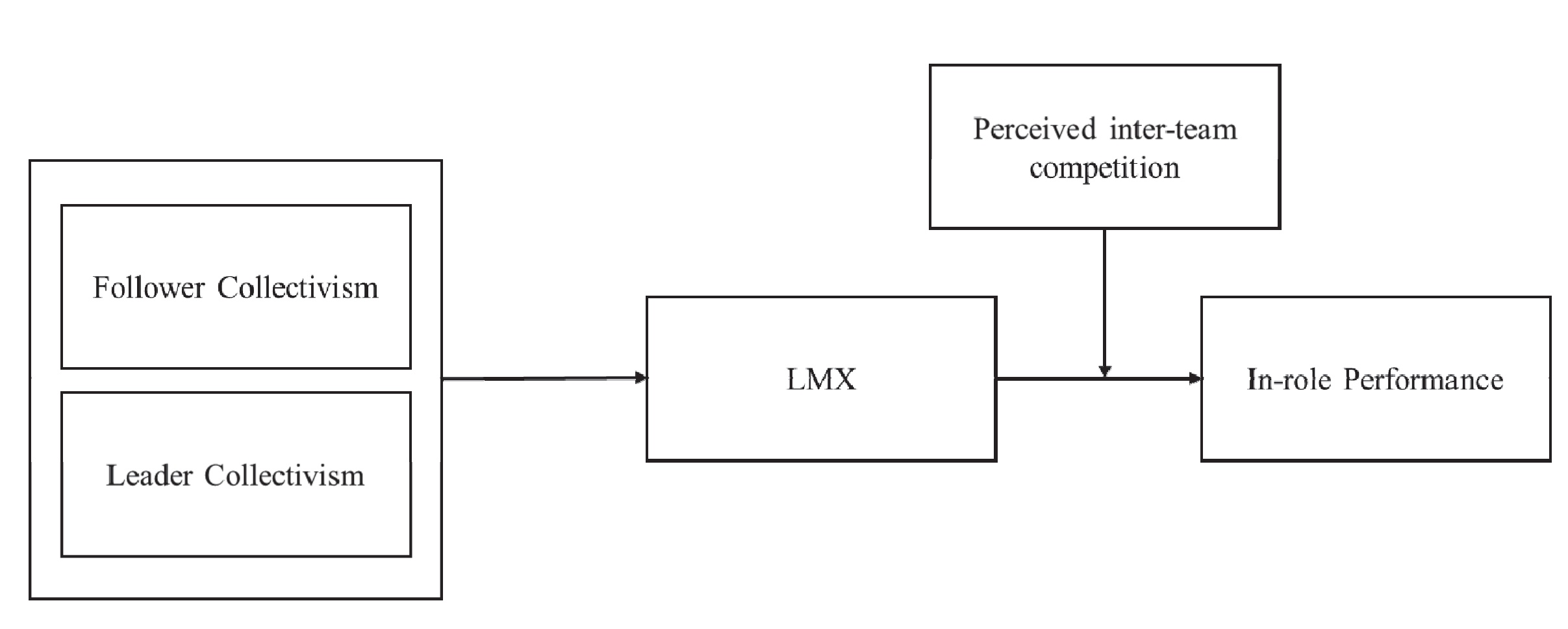
Figure 1 depicts the research model in this study.
Ⅲ. Methods
3.1 Data and Sample
This study conducted an online survey targeting employees working at a branch of a Chinese energy company located in the Shanghai district. This branch employed 511 individuals, excluding executives. Online surveys were distributed to 55 leaders and 456 followers. Of these, 51 leaders (90.9%) and 256 followers (56.1%) completed the survey, resulting in a total sample size of 307 respondents (60.1%).
Among the followers, 117 (45.7%) were male, 237 (92.6%) were married, and 89 (34.8%) had more than a middle school degree. Followers’ mean age was 46.2 years (SD 6.4), with average team tenure of 10.2 years (SD 10.1). Among the leaders, 39 (76.5%) were male, 51 (100%) were married, and 17 (33.3%) had more than a middle school degree. Leaders’ mean age was 49.2 years (SD 4.5), with average team tenure of 13.4 years (SD 11.3).
3.2 Measures
All measures used 5-point Likert scales (1= “strongly disagree” to 5= “strongly agree”). This study followed translation-backtranslation procedures to create Chinese versions (Brislin, 1980).
Collectivism. Collectivism was measured with six items developed by Dorfman and Howell (1988). A sample item is “Group success is more important than individual success”. The reliability coefficients for this scale were .80 for followers and .86 for leaders.
Leader-member exchange (LMX). Followers rated LMX quality using the seven-item LMX scale (Graen and Uhl-Bien, 1995). Example items include “I have a good working relationship with my supervisor” and “My supervisor understands my problems and needs”. Cronbach’s alpha was .94.
Perceived inter-team competition. Followers rated perceived inter-team competition using a three-item scale (Campion et al., 1993). An example item is “Other teams in the company try to outperform this team”. Cronbach’s alpha was .78.
In-role performance. Followers rated in-role performance using the four-item scale (Williams and Anderson, 1991). Example items include “I adequately complete assigned duties” and “I fulfill responsibilities specified in job description”. Cronbach’s alpha was .95.
Control variables. Demographic similarities between leaders and followers influence interaction patterns and mutual understanding, thereby affecting LMX quality (e.g., Bauer and Green, 1996; Zhang et al., 2012). From a relational demography perspective, similarity in observable attributes may shape leader–follower relationships independently of value congruence (Tsui and O'reilly III, 1989). Therefore, the (dis)similarity in these variables was controlled for in this study. Similarity in gender and marital status was operationalized as a dummy variable (0 = different gender or marital status and 1 = same gender or marital status). Dissimilarity in age, tenure in teams, and education level was controlled using an absolute difference score (Bauer and Green, 1996; Zhang et al., 2012).
3.2.1 Analysis Strategy
1) Congruence Effects
To test Hypotheses 1-3 regarding congruence effects, this study conducted multilevel polynomial regression, followed by response surface analysis to visualize the relationship (see Edwards and Cable, 2009; Edwards and Parry, 1993). For testing congruence effects, this study analyzed the incongruence line curvature (calculated as $b_3 - b_4 + b_5$) and the first principal axis parameters (slope $p_{11} = 1.0$, intercept $p_{10} = 0$). These parameters indicate whether LMX quality peaks when follower-leader collectivism values align (Cole et al., 2013; Edwards and Cable, 2009; Edwards and Parry, 1993).
To examine the level of congruence, this study assessed the slope ($b_2 - b_1$) and curvature ($b_3 + b_4 + b_5$) along the congruence line. A positive and significant slope would indicate higher LMX quality at high collectivism congruence, while non-significant curvature would indicate a linear relationship along the congruence line. For asymmetrical effects, this study calculated the lateral shift quantity ($[b_2 - b_1] / [2 \times (b_3 - b_4 + b_5)]$) to assess the differential effects of incongruence types (Cole et al., 2013; Edwards and Cable, 2009; Edwards and Parry, 1993).
2) Moderation and Mediation Test
The mediation analysis employed a block variable approach combining polynomial terms, followed by a multilevel path analysis to test indirect effects through LMX (see Cole et al., 2013; Edwards and Cable, 2009; Zhang et al., 2012). The indirect effect of collectivism (in)congruence on in-role performance via LMX was calculated by multiplying two coefficients: (1) the effect of the block variable on LMX, and (2) the effect of LMX on in-role performance, while also accounting for the direct effect of the block variable.
Next, the moderating effect of perceived inter-team competition on the relationship between LMX and in-role performance was tested. In the multilevel path analysis, the interaction term of LMX and perceived inter-team competition was included to assess the significance of the moderating effect. The moderating effect was also plotted for interpretation. To test the moderated mediation of perceived inter-team competition on the indirect relationship between collectivism (in)congruence and in-role performance via LMX, bootstrapping with 20,000 samples was used. Bias-corrected confidence intervals were obtained to evaluate the significance of this effect.
Ⅳ. Results
Table 1 shows the means, standard deviations and correlations of the variables. Follower collectivism was positively and significantly correlated with LMX (r = .379, p < .001), perceived inter-team competition (r = .389, p < .001), and in-role performance (r = .124, p = .047). In contrast, leader collectivism was not significantly correlated with LMX (r = -.085, p = .174), perceived inter-team competition (r = -.034, p = .589), and in-role performance (r = .052, p = .409).
Table 1 Means, Standard Deviations, and Correlations among Variables
| Variables | Mean | SD | 1 | 2 | 3 | 4 | 5 | 6 | 7 | 8 | 9 |
|---|---|---|---|---|---|---|---|---|---|---|---|
| 1. Age dissimilarity | 6.02 | 5.58 | |||||||||
| 2. Gender similarity | 0.54 | 0.50 | -.118+ | ||||||||
| 3. Marital status similarity | 0.93 | 0.26 | -.416*** | .095 | |||||||
| 4. Education dissimilarity | 0.66 | 0.74 | .221*** | .059 | -.130* | ||||||
| 5. Tenure dissimilarity | 10.69 | 9.97 | .063 | -.027 | .008 | -.050 | |||||
| 6. Follower collectivism | 3.53 | 0.70 | -.100 | -.059 | .069 | -.120+ | .020 | ||||
| 7. Leader collectivism | 3.78 | 0.81 | .039 | .049 | .011 | .197** | -.184** | .065 | |||
| 8. LMX | 3.88 | 0.68 | .066 | -.021 | .009 | -.041 | .057 | .379*** | -.085 | ||
| 9. Inter-team competition | 3.67 | 0.63 | .091 | -.042 | -.036 | -.008 | .026 | .389*** | -.034 | .613*** | |
| 10. In-role performance | 4.27 | 0.52 | -.046 | .022 | .040 | .026 | -.028 | .124* | .052 | .365*** | .232*** |
Note. N = 256, *** p<.001, ** p<.01, * p<.05, + p<.1
To assess the distinctiveness of the four self-reported follower variables (i.e., follower collectivism, LMX, perceived inter-team competition and in-role performance), confirmatory factor analyses (CFA) were conducted. The hypothesized four-factor model demonstrated acceptable fit (χ²=434.935(164), CFI = .924, TLI = .912, SRMR = .067, and RMSEA = .080) and showed significantly better fit than any alternative models. To address common method bias (CMB), Harman’s single-factor test was conducted using the follower self-reported variables. The result indicated that the single factor explained only 38.05% (<50%) of the variance (Podsakoff et al., 2003). Based on these findings, this study treated the variables as distinct constructs.
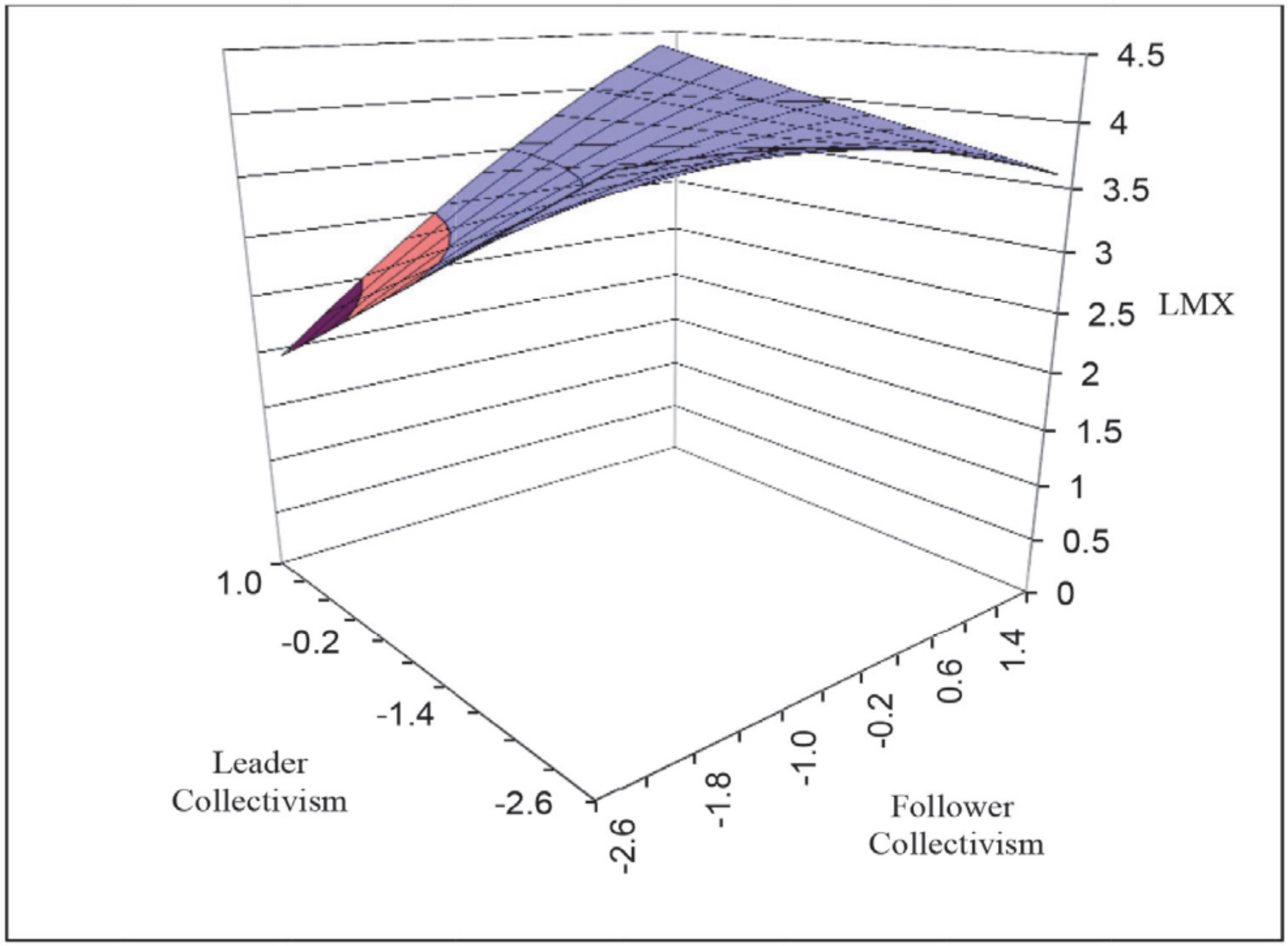
Hypothesis 1 predicted a congruence effect, proposing that follower-leader congruence in collectivism would enhance LMX quality. Table 2 presents the multilevel polynomial regression coefficients, including slopes and curvatures of congruence and incongruence lines predicting LMX. The second-order polynomial terms showed joint significance (χ²(3) = 8.23, p = 0.042), with the incongruence line displaying a downward curvature (curvature = -.219, p = .040), thereby confirming the first condition. Subsequently, the slope (p11) and the intercept (p10) of the first principal axis were analyzed. The slope (p11) was not significantly different from 1.0 (95% CI [-4.660, 14.115]) and the intercept (p10) was not significantly different from zero (95% CI [-152.705, 3.088]). These findings satisfied the second condition. Figure 2 depicts the response surface derived from the multilevel polynomial regression, highlighting the effect of collectivism congruence between followers and leaders. Thus, Hypothesis 1 was supported.
Table 2 Multilevel Polynomial Regression on LMX
| Variables | Model 1 | Model 2 |
|---|---|---|
| Age dissimilarity | 0.019* (0.008) | 0.021** (0.008) |
| Gender similarity | 0.004 (0.079) | 0.010 (0.079) |
| Marital status similarity | 0.084 (0.159) | 0.067 (0.158) |
| Education dissimilarity | 0.012 (0.061) | 0.014 (0.060) |
| Tenure dissimilarity | 0.000 (0.004) | -0.001 (0.004) |
| Follower collectivism (F) | 0.359*** (0.057) | 0.309*** (0.062) |
| Leader collectivism (L) | -0.111 (0.069) | -0.069 (0.069) |
| $F^{2}$ | -0.040 (0.049) | |
| $F \times L$ | 0.181** (0.065) | |
| $L^{2}$ | 0.002 (0.048) | |
| Constant | 3.736*** (0.192) | 3.745*** (0.192) |
| Variance of random components | ||
| Between-group variance | 0.044 (0.030) | 0.041 (0.029) |
| Within-group variance | 0.341 (0.035) | 0.332 (0.034) |
| Congruence line (F = L) | ||
| Slope | 0.240** | |
| Curvature | 0.143+ | |
| Incongruence line (F = -L) | ||
| Slope | 0.378*** | |
| Curvature | -0.219* | |
| The 3 quadratic terms | 8.23* | |
| log-likelihood | -237.524 | -233.476 |
Note. n = 256, group = 51; *** p<.001, ** p<.01, * p<.05, + p<.1
Hypothesis 2 posited that LMX quality would reach its highest levels when both follower and leader exhibited high levels of collectivism, compared to when both exhibited low levels of collectivism. The analysis presented in Table 3 demonstrated a significant positive slope along the congruence line (β = 0.240, p = 0.006). This finding, supported by Figure 2, indicates that LMX quality was enhanced when collectivism was aligned at higher levels rather than at lower levels. Thus, Hypothesis 2 was supported.
Table 3 Results for indirect effects of follower-leader collectivism congruence on in-role performance
| Variables | LMX | In-role performance |
|---|---|---|
| Coefficient of the block variable (i.e., direct effect of congruence) | 1.048*** | -0.092 |
| Coefficient of LMX (LMX) | .304*** | |
| Indirect effect of congruence via LMX | 0.319 | |
| 95% bootstrapped confidence intervals for the indirect effect | [.166, .512] |
Note. n = 256, group = 51; *** p<.001, ** p<.01, * p<.05, + p<.1
Hypothesis 3 predicted that LMX quality would decrease more sharply when a leader’s collectivism was higher than a follower’s collectivism, compared to the reverse scenario. The lateral shift quantity was positive (.86, p =.053, one-tailed), indicating a ridge shift consistent with this directional prediction, although the effect was marginal. Figure 2 likewise shows a steeper decline in LMX quality when leaders are higher in collectivism than their followers, compared to when followers are higher than their leaders. Taken together, these results provide marginal support for Hypothesis 3.
Hypothesis 4 predicted that LMX quality would mediate the relationship between follower-leader collectivism and in-role performance. Table 3 presents the results of the indirect effect analysis. The collectivism congruence block variable was positively associated with LMX quality (path a = 1.048, p < .001), and LMX was positively associated with in-role performance (path b = 0.304, p < .001). When LMX was included in the model, the block variable’s effect on in-role performance became non-significant (path 𝑐′ = -0.092, p = .444). Confidence intervals of the indirect effect, derived from bias-corrected bootstrapping (ab = .319, 95% CI [.166, .512]), excluded zero, providing support for Hypothesis 4.
Hypothesis 5 predicted the moderating effect of perceived inter-team competition on the relationship between LMX quality and in-role performance. Model 2 in Table 4 shows that the interaction term of LMX and perceived inter-team competition was significant (β = 0.244, p < 0.001), providing support for Hypothesis 5. The moderating effect is illustrated in Figure 3, which shows that in-role performance increased when both LMX quality and perceived inter-team competition were higher, compared to when perceived inter-team competition was lower.
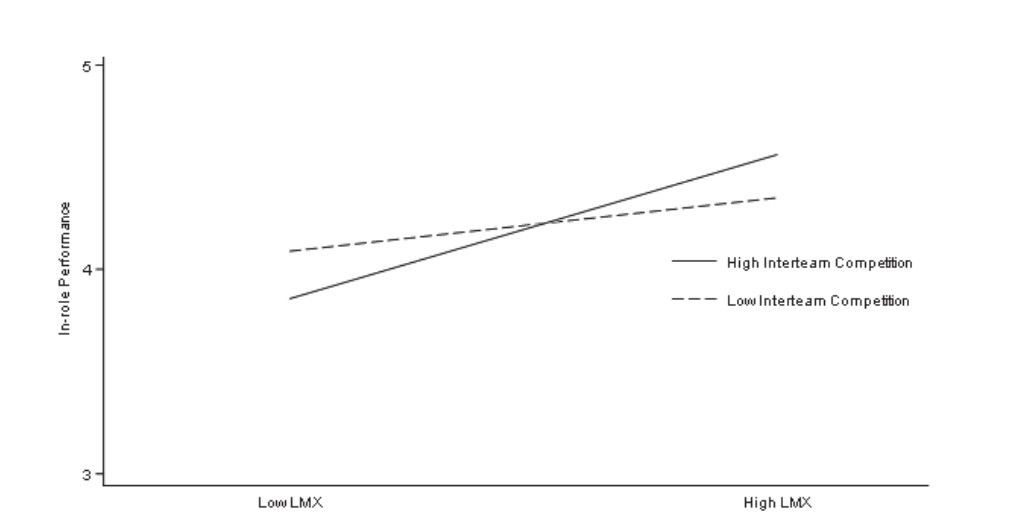
Table 4 Results of moderated multilevel regression analysis on in-role performance
| Variables | Model 1 | Model 2 |
|---|---|---|
| Age dissimilarity | -0.008 (0.006) | -0.007 (0.006) |
| Gender similarity | 0.012 (0.061) | -0.012 (0.058) |
| Marital status similarity | 0.026 (0.126) | 0.031 (0.120) |
| Education dissimilarity | 0.035 (0.042) | 0.053 (0.040) |
| Tenure dissimilarity | -0.002 (0.003) | -0.002 (0.003) |
| Block variable | -0.104 (0.123) | 0.062 (0.121) |
| LMX | 0.291*** (0.058) | -0.545** (0.168) |
| Perceived inter-team competition | 0.028 (0.062) | -0.959*** (0.197) |
| Interaction: LMX x Perceived inter-team competition | 0.244*** (0.046) | |
| Constant | 3.050*** (0.262) | 6.381*** (0.680) |
| Variance of random components | ||
| Between-group variance | 0.000 (0.000) | 0.000 (0.000) |
| Within-group variance | 0.230 (0.020) | 0.207 (0.018) |
| log-likelihood | -175.104 | -161.947 |
Hypothesis 6 proposed a moderated mediation effect of perceived inter-team competition. Table 4 shows that the indirect effect of collectivism (in)congruence on in-role performance through LMX varied significantly across levels of perceived inter-team competition. Specifically, the mediating effect was smaller at 1 SD below the mean (β = 0.207, 95% CI [.036, .418]), moderate at the mean (β = 0.368, 95% CI [.198, .587]), and larger at 1 SD above the mean (β = 0.529, 95% CI [.328, .776]). These results indicate that the mediating effect of LMX becomes stronger as perceived inter-team competition increases. Thus, Hypothesis 6 was supported.
Ⅴ. Discussion
While person–supervisor fit has been extensively examined, follower–leader congruence in collectivism remains understudied. This study extends the value congruence literature by showing that collectivism congruence enhances in-role performance via high-quality LMX. The indirect effect was moderated by perceived inter-team competition. Moreover, the response surface indicated that congruence at higher levels of collectivism was associated with higher LMX than at lower levels. In addition, the lateral shift quantity was positive, indicating that LMX decreased more sharply when leaders’ collectivism exceeded followers’ collectivism than in the reverse case, although this asymmetry was marginal.
5.1 Theoretical Implications
These findings offer important theoretical implications. First, while prior research has examined collectivism’s influence on cooperation (e.g., Marcus and Le, 2013; Wagner III, 1995) and group processes (Goncalo and Staw, 2006), limited attention has been given to dyadic value alignment. This study demonstrates that collectivism congruence, rather than followers’ collectivism alone, enhances in-role performance through high-quality LMX. Misalignment leads to weaker LMX and lower performance, underscoring the leader’s critical role and the importance of considering value congruence in understanding collectivism’s impact.
Second, this study identifies LMX as a key mechanism linking follower–leader collectivism congruence to in-role performance. While prior research has explored cultural value congruence using mediators such as trust (e.g., Bao et al., 2021; Ye et al., 2021) and work engagement (e.g., Ye et al., 2021), the mediating role of LMX in collectivism congruence has been largely overlooked. The findings suggest that shared collectivism fosters stronger leader–follower relationships, which enhance goal alignment and work orientation, ultimately improving performance.
Finally, this study demonstrates that follower-perceived inter-team competition moderates both the direct relationship between LMX and in-role performance and the indirect effect of follower-leader collectivism congruence on performance via LMX. These findings highlight that the effectiveness of value congruence depends on the broader team context, which can either strengthen or weaken its influence on individual performance. By highlighting the contextual influence of inter-team competition, this study opens avenues for future research to examine how such boundary conditions shape the effects of value congruence on performance.
5.2 Managerial Implications
The findings of this study underscore the importance of leader sensitivity to followers’ collectivism orientations and the need for behavioral alignment to enhance leader–follower relationships. Contrary to prevailing assumptions that individualistic followers are less inclined to engage in relational exchanges, the results indicate that value alignment in collectivism can foster high-quality relationships and improve in-role performance. Leaders managing followers with lower collectivism may benefit from employing structured goal-setting and developmental support strategies to cultivate shared objectives and reinforce alignment, ultimately enhancing both individual and team outcomes.
Inter-team competition can function as a strategic mechanism to enhance employees’ in-role performance. When followers perceive high levels of inter-team competition, they tend to exhibit greater task focus and accountability. Organizations may cultivate such an environment by implementing human resource practices, including team-based reward systems and evaluation criteria that emphasize inter-team comparisons. These practices may also assist leaders in addressing team performance challenges, as prior research has shown that intergroup competition is positively associated with group performance (e.g., Baer et al., 2010; Pfeffer and Sutton, 2000).
5.3 Limitations and Future Research
This study has several limitations. First, its cross-sectional design limits the ability to establish causal relationships within the indirect model. Incorporating temporal separation when measuring independent variables, mediators, and outcomes would allow for a more robust investigation of causal relationships. Such an approach would enhance causal inferences regarding how follower-leader value congruence impacts individual outcomes through LMX.
Second, although follower and leader collectivism were measured separately, the use of follower-reported LMX, perceived inter-team competition, and in-role performance raises potential concerns about common method bias (CMB). However, no inter-variable correlations exceeded .80 (Shrestha, 2020) and Harman’s single-factor test revealed that a single factor accounted for less than 50% of the variance (Podsakoff et al., 2003). CFA results further suggest that CMB is not severe. To enhance validity, future research should incorporate multi-source data, including leader-rated LMX, leader-rated performance, or archival indicators. Given prior evidence of discrepancies in LMX ratings across raters and their differential associations with outcomes (Cogliser et al., 2009; Martin et al., 2016), future studies should examine whether value (in)congruence differentially influences leader-versus follower-rated LMX and subsequent outcomes.
Third, this study used data drawn from a Chinese organizational context, where collectivistic values tend to be relatively high. Therefore, the findings may have limitations regarding generalizability. However, this study focuses on follower–leader value congruence rather than the independent effect of collectivism itself. From a person–environment fit perspective, the relational mechanisms through which value alignment influences LMX and performance may be relevant across cultural contexts. Future research could examine whether similar patterns emerge in different cultural settings.
Fourth, this study posited that value congruence positively impacts LMX by fostering shared work orientations and goals between followers and leaders. However, it did not directly measure these behavioral aspects. Values are antecedents of behaviors and behaviors are more directly linked to individual outcomes than values. In this regard, value congruence may be reflected in relational behaviors, such as goal alignment and coordinated interaction patterns. Future research could assess these behaviors to determine whether value congruence translates into behavioral alignment, thereby enhancing exchange relationships.
Finally, future research may benefit from examining additional contextual and individual-level moderators beyond inter-team conflict that shape the effectiveness of LMX and value congruence. Variables such as task interdependence and follower proactive personality may influence the extent to which value congruence is translated into LMX and, in turn, subsequent in-role performance.
Ⅵ. Conclusions
This study demonstrates that follower–leader collectivism congruence enhances in-role performance via LMX, with perceived inter-team competition serving as a boundary condition. The findings underscore the importance of value alignment in shaping leader–follower relationships and highlight the contextual factors that moderate these effects. Specifically, congruence at higher levels of collectivism was associated with stronger LMX than at lower levels, and the negative effects of incongruence appeared greater when leaders’ collectivism exceeded that of their followers. These findings suggest that leaders who are attuned to followers’ collectivistic orientations and organizations that strategically leverage inter-team competition can enhance both exchange quality and individual performance. By clarifying the underlying mechanism and identifying a key moderator, this study advances theory on value congruence.
Conditional indirect effects of collectivism congruence on in-role performance through LMX
| Coeff. | BootSE | BootLLCI | BootULCI | |
|---|---|---|---|---|
| M − 1SD | .207 | .097 | .036 | .418 |
| M | .368 | .100 | .198 | .587 |
| M + 1SD | .529 | .115 | .328 | .776 |
| Index of moderated mediation | .256 | .058 | .133 | .366 |
Note. n = 256, group = 51; *** p<.001, ** p<.01, * p<.05, + p<.1
Author Biographies
∙ Jaeyun Jeong is currently an assistant professor at Department of Business Administration, Keimyung University. He received his Ph.D. from Hanyang University. His primary research areas include emotional labor, social networks, and person-organization fit.
∙ Kyoung Won Park is a full professor at the School of Business Administration, Hanyang University ERICA Campus. He received his Ph.D. from the Human Resources and Industrial Relations (HRIR) program at the University of Minnesota. His primary research interests include labor relations, collective bargaining, and human resource management practices in employment relations contexts.